MP Board 2026-27 Academic Calendar — Exams, Results & Al…

MP Board (Madhya Pradesh Board of Secondary Education) has released the complete academic session calendar for 2026-27, covering all major events including enrollment deadlines, examination schedules, result announcements, practical exams, and supplementary exams. This comprehensive guide provides Class 10 (High School) and Class 12 (Higher Secondary) students with every important date they need for the 2026-27 academic year. Knowing these dates in advance helps you plan your studies, avoid late fees, and never miss a crucial deadline — especially for enrollment, exam forms, and revaluation windows.

📅 Academic Session Overview 2026-27

The MP Board academic session 2026-27 begins in April 2026 and runs through March 2027. The session follows the standard pattern set by the Madhya Pradesh Board of Secondary Education (MPBSE), Bhopal. Key highlights include the online enrollment window for Classes 9 and 11, the main board examination schedule in February-March 2027, practical exams in January-February 2027, and the second exam (compartment) in June-July 2027.

All processes — from enrollment to exam form submission, fee payment, and result checking — are conducted through the official MP Online portal (www.mponline.gov.in) and the MPBSE website (mpbse.nic.in). Students are strongly advised to complete all procedures within the prescribed deadlines to avoid late fees and penalties.

Event Tentative Timeline Status
Session Start April 2026 ✅ Completed
Class 9 & 11 Enrollment (Normal Fee) June — July 2026 🟡 Ongoing
Enrollment with Late Fee (₹1,000) August — December 2026 🔴 Upcoming
Subject Correction Window October — December 2026 🔴 Upcoming
Board Exam Form Submission (Regular) December 2026 — January 2027 🔴 Upcoming
Practical & Internal Exams January — February 2027 🔴 Upcoming
Main Board Exams (Class 10 & 12) February — March 2027 🔴 Upcoming
Main Exam Result Declaration April — May 2027 🔴 Upcoming
Supplementary (Second) Exam Applications May — June 2027 🔴 Upcoming
Supplementary Exam Conduct June — July 2027 🔴 Upcoming

📝 Class 9 & 11 Enrollment Schedule

Enrollment (नामांकन) for Classes 9 and 11 is the most time-sensitive process in the academic calendar. All students entering Class 9 or Class 11 in the 2026-27 session must complete online enrollment through the MP Online portal. Schools and colleges handle bulk enrollment, but students must ensure their details (name, parent name, date of birth, subject choices) are correctly entered.

Enrollment Fee Structure

Period Class 9 Fee Class 11 Fee Late Fee
Normal Period (June — July) ₹350 ₹400 Nil
Late Fee Period 1 (Aug — Sep) ₹350 ₹400 ₹500
Late Fee Period 2 (Oct — Dec) ₹350 ₹400 ₹1,000

Students who miss the normal period can still enroll by paying a late fee of ₹500 (Aug-Sep) or ₹1,000 (Oct-Dec). After December 31, enrollment is typically not accepted, so it is crucial to complete the process before the year ends.

💰 Exam Fee & Application Deadlines

Students must fill their board exam application forms (परीक्षा आवेदन-पत्र) online through their respective schools during the designated window. The exam form submission typically opens in December 2026 and closes in January 2027. The fee varies by class and number of subjects.

Category Class 10 (HSC) Class 12 (HSSC)
Regular Students ₹950 ₹1,200
Private Students ₹1,850 ₹2,300
Late Fee (per application) ₹500 — ₹1,500 ₹500 — ₹1,500

📚 Board Exam Schedule 2027

The MP Board Class 10 (High School) and Class 12 (Higher Secondary) main examinations for the 2026-27 session are tentatively scheduled for February to March 2027. The detailed date sheet (time table) is usually released 2-3 months before the exams — around November-December 2026.

Expected Exam Timeline

  • Class 10 (High School) Exams: First week of February 2027 — Last week of March 2027
  • Class 12 (Higher Secondary) Exams: First week of February 2027 — Last week of March 2027
  • Morning Shift (Class 10): 8:00 AM to 11:15 AM
  • Evening Shift (Class 12): 2:00 PM to 5:15 PM
  • Duration per paper: 3 hours (with 15 minutes reading time)

MP Board follows a subject-wise staggered schedule, meaning exams are held on alternate days with 2-3 day gaps between major subjects. This gives students adequate preparation time between papers. The detailed time table, once released, will be available on the official MPBSE website (mpbse.nic.in) and will also be shared by schools.

🔬 Practical & Internal Exam Dates

Practical examinations (प्रायोगिक परीक्षा) for Class 12 science subjects and vocational courses are conducted in January-February 2027, before the theory exams. Internal assessments (आंतरिक मूल्यांकन) for Class 10 cover subjects like Science Practical, Social Science Project, and additional subjects.

Component Timeline Conducting Authority
Class 12 Science Practicals January — February 2027 School-level + External Examiner
Class 12 Vocational Practicals January — February 2027 School-level
Class 10 Internal Assessment December 2026 — January 2027 School-level
Project Work Submission January 2027 School-level

Internal assessment marks for Class 10 subjects typically carry 20% weightage, while practical exams for Class 12 science carry 30 marks per subject. Students must ensure they attend all practical sessions and submit their project work on time to avoid losing these crucial marks.

🎯 Result Declaration Schedule

MP Board results are typically announced 6-8 weeks after the last exam. The 2026-27 session results are expected in April-May 2027. Here is the expected result timeline based on previous year patterns:

Result Expected Date Mode of Release
Class 10 Main Result April 2027 Online (mpbse.nic.in)
Class 12 Main Result April — May 2027 Online (mpbse.nic.in)
Supplementary Result July — August 2027 Online (mpbse.nic.in)

Results can be checked on the official MPBSE website (mpbse.nic.in), MP Online portal, or via SMS. Students need their roll number and date of birth to access their marksheet. After results, students can apply for marks verification, photocopy of answer sheets, or revaluation within the stipulated window.

🔄 Supplementary & Second Exam Timeline

Students who do not pass one or more subjects in the main examination can appear for the supplementary (second) exam. The MP Board second exam for the 2026-27 session follows this expected timeline:

Event Tentative Dates
Online Application Period May — June 2027
Application with Late Fee June 2027
Supplementary Exam Conduct June — July 2027
Supplementary Result July — August 2027

Second Exam Fee (per subject): ₹500 for 1 subject, ₹1,000 for 2 subjects, ₹1,500 for 3-4 subjects, ₹2,000 for more than 4 subjects. Students must fill the second exam form through their respective schools via MP Online portal. Those who passed some subjects can also appear for mark improvement in the second exam.

🔍 Revaluation & Marks Verification

After the main exam results are declared, MP Board allows students to apply for marks verification (पुनर्गणना) and obtain photocopies of their answer sheets (उत्तरपुस्तिका की छायाप्रति). The revaluation window typically opens 1-2 days after results and remains open for 10-15 days.

Revaluation Fee Structure

  • Marks Verification (पुनर्गणना): ₹200 per subject
  • Answer Sheet Photocopy (छायाप्रति): ₹300 per subject — reviewed answer sheets available in PDF format
  • Re-totaling: ₹100 per subject

Revaluation results are typically announced 2-3 weeks after the application deadline. If marks are revised, the updated marksheet is issued. Students unsatisfied with revaluation can also apply for scrutiny through the MP Online portal within the specified dates.

📋 Exam Pattern & Marking Scheme 2026-27

Understanding the MP Board exam pattern and marking scheme is essential for effective preparation. For the 2026-27 session, the board follows a structured evaluation system with theory papers, practical exams, and internal assessments.

Class 10 (High School) Exam Pattern

Subject Theory Marks Internal/Practical Total
Hindi 80 20 100
English 80 20 100
Mathematics 80 20 100
Science 72 28 100
Social Science 80 20 100
Additional Subject 80 20 100

Class 12 (Higher Secondary) Exam Pattern

Class 12 subjects follow a similar 80+20 pattern for most subjects, except Science practical subjects where the breakdown is 70 theory + 30 practical. The comprehensive marking scheme for each subject is available in the MP Board syllabus document published on mpbse.nic.in at the beginning of the session. Students should check their specific subject syllabus for exact marks distribution.

Question Paper Pattern

MP Board question papers typically include multiple choice questions (MCQs), very short answer questions (1 mark), short answer questions (2-3 marks), long answer questions (4-5 marks), and case study/application-based questions. Starting from the 2025-26 session, the board has increased the proportion of competency-based and application-oriented questions to align with NEP 2020 guidelines. Students should practice sample papers and previous year question papers available on the MPBSE website to familiarize themselves with the question format.

📱 How to Check MP Board Results 2027

Once the MP Board results are declared in April-May 2027, students can check their results through multiple channels. Here is a step-by-step guide:

Online Method (via mpbse.nic.in):

  1. Visit the official website: mpbse.nic.in
  2. Click on the “Result” section on the homepage
  3. Select your class — High School (Class 10) or Higher Secondary (Class 12)
  4. Enter your roll number as mentioned on your admit card
  5. Select your exam year (2027) and enter your date of birth
  6. Click “Submit” to view your result
  7. Download and print your marksheet for future reference

Alternative Methods: Results can also be checked via the MP Online portal (mponline.gov.in), through SMS by typing ‘MPBSE10 ROLLNO’ or ‘MPBSE12 ROLLNO’ and sending to 56263, or through the UMANG app and DigiLocker platform. The board also provides an SMS service where results are sent directly to registered mobile numbers.

📖 6-Month Study Plan for MP Board 2027 Exams

With board exams scheduled for February-March 2027, students should start preparing well in advance. Here is a suggested 6-month study plan:

Period Focus Area Activities
September-October 2026 Foundation Complete entire syllabus reading, make chapter-wise notes
November-December 2026 Revision Round 1 Solve chapter-wise PYQs, revise formulas & key concepts
January 2027 Revision Round 2 Full-length mock tests, sample papers, weak area focus
February-March 2027 Exam Phase Subject-wise revision, previous day quick reviews

Students should dedicate at least 6-8 hours daily for board exam preparation during the peak revision months. Prioritize subjects based on your strengths and weaknesses, and practice with a timer to simulate real exam conditions. Solving at least 5-10 previous year question papers for each subject is highly recommended for understanding question patterns and time management.

⚠️ Common Mistakes to Avoid in MP Board 2026-27

Mistake Consequence Solution
Missing enrollment deadline Heavy late fee (₹1,000) or no exam eligibility Complete enrollment before July 2026
Wrong subject selection Cannot change after correction window closes Verify subjects during enrollment, use correction window if needed
Ignoring practical exams Losing 20-30 easy marks permanently Prepare practical journals and attend all sessions
Skipping revaluation window Cannot get marks corrected if there was an error Apply within 10-15 days of result declaration
Not checking syllabus updates Studying deleted topics or missing new ones Download latest syllabus from mpbse.nic.in at session start

✏️ Subject Correction Window

MP Board provides a subject correction window (विषय संशोधन) after enrollment, typically between October and December. During this period, students can request corrections to their enrolled subjects — such as changing optional subjects, correcting subject codes, or updating medium of instruction. Subject corrections are done through the school principal via the MP Online portal. A nominal fee of ₹50-100 per correction is charged. After this window closes, no further subject changes are permitted for the board exams. This is especially important for Class 11 students who may have enrolled with the wrong combination of subjects.

❓ FAQs — MP Board Academic Calendar 2026-27

Q1: When will the MP Board 2027 exam time table be released?
The MP Board exam time table for 2026-27 session is expected in November-December 2026. It will be published on the official MPBSE website (mpbse.nic.in) and shared with all affiliated schools.

Q2: What is the last date for Class 9 & 11 enrollment 2026-27?
Normal enrollment period runs through July 2026. With late fee of ₹500, enrollment is open August-September 2026. With ₹1,000 late fee, enrollment is open October-December 2026. After December 31, no enrollment is accepted.

Q3: How can I check my MP Board result in 2027?
Results will be available on mpbse.nic.in, mponline.gov.in, and through SMS. You need your roll number and date of birth. The MPBSE also provides results via the UMANG app and DigiLocker.

Q4: Can I change my subjects after enrollment?
Yes, MP Board provides a subject correction window typically in October-December 2026. Changes can be made through your school principal via the MP Online portal with a nominal fee.

Q5: What is the fee for MP Board supplementary exam 2027?
The second exam fee is ₹500 for 1 subject, ₹1,000 for 2 subjects, ₹1,500 for 3-4 subjects, and ₹2,000 for more than 4 subjects. Late fee is additional if applied after the deadline.

Q6: When do the practical exams for Class 12 start in 2026-27?
Practical exams for Class 12 science and vocational subjects are scheduled for January-February 2027, before the theory exams. Schools conduct them with external examiners appointed by the board.

Q7: Can private students appear for MP Board 2027 exams?
Yes, private (स्वाध्यायी) students can appear. Their exam form fee is higher — approximately ₹1,850 for Class 10 and ₹2,300 for Class 12. Private students apply through designated MP Online centers.

Q8: How many subjects are compulsory in Class 10 MP Board?
Class 10 students must appear in a minimum of 6 subjects: Hindi, English, Mathematics, Science, Social Science, and one additional subject (Sanskrit, Computer, etc.). All subjects are mandatory for the final result calculation.

Q9: What documents are needed for MP Board exam form 2027?
Students need: recent passport-size photograph, scanned signature, previous year’s marksheet, Aadhaar card (if available), and school TC/transfer certificate. The school uploads these during the online application process.

Q10: Is there any age relaxation for Class 9 enrollment?
Yes, MP Board provides age relaxation for Class 9 enrollment. The normal age limit is 14 years, but relaxation of up to 2 years is available based on the provisions in MPBSE circulars. Check with your school for specific eligibility.

Q11: How long after results does MP Board revaluation open?
Revaluation applications typically open within 1-2 days of result declaration and remain open for 10-15 days. Results of revaluation are usually declared within 2-3 weeks of the application deadline.

Q12: What is the passing marks percentage in MP Board exams?
Students need a minimum of 33% marks in each subject to pass. For Class 10, the overall aggregate should also meet the passing criteria. In practical subjects, students must secure at least 33% in both theory and practical separately.
📚 Related Study Material

📚 Related Study Material

📚 Related Study Material

📚 Related Study Material

📚 Related Study Material

MP Board 9वीं-11वीं ऑनलाइन नामांकन 2026-27 पूरी जानकारी

MP Board (MPBSE) ने शैक्षणिक सत्र 2026-27 के लिए कक्षा 9वीं और 11वीं के ऑनलाइन नामांकन (Enrollment) की प्रक्रिया शुरू कर दी है। यह नामांकन प्रक्रिया उन सभी विद्यार्थियों के लिए अनिवार्य है जो मध्य प्रदेश के किसी मान्यता प्राप्त स्कूल में कक्षा 9 या कक्षा 11 में अध्ययनरत हैं। Praveshniti 2026-2027 (प्रवेश एवं परीक्षा मार्गदर्शिका) के अनुसार, नियमित शुल्क के साथ नामांकन की अंतिम तिथि पहले ही निर्धारित की जा चुकी है, लेकिन ₹1,000 विलंब शुल्क के साथ 31 दिसंबर 2026 तक नामांकन किया जा सकता है। इस पोस्ट में हम कक्षा 9वीं और 11वीं के नामांकन की पूरी प्रक्रिया, शुल्क, पात्रता, आवश्यक दस्तावेज और महत्वपूर्ण तिथियों के बारे में विस्तार से बताएंगे — ताकि आप बिना किसी परेशानी के अपना नामांकन करवा सकें।

1. नामांकन क्या है और यह क्यों ज़रूरी है?

MP Board का नामांकन (Enrollment) वह प्रक्रिया है जिसके माध्यम से किसी विद्यार्थी का रिकॉर्ड माध्यमिक शिक्षा मण्डल, मध्य प्रदेश के डेटाबेस में पंजीकृत किया जाता है। यह परीक्षा आवेदन से अलग है — नामांकन कक्षा 9वीं और 11वीं में प्रवेश के बाद कराया जाता है, जबकि परीक्षा आवेदन कक्षा 10वीं और 12वीं की बोर्ड परीक्षा के लिए भरा जाता है।

नामांकन क्यों ज़रूरी है?

  • बिना नामांकन के विद्यार्थी बोर्ड परीक्षा में शामिल नहीं हो सकता।
  • नामांकन संख्या (Enrollment Number) ही आगे की सभी परीक्षाओं के लिए आधार होती है।
  • अंकसूची (Marksheet) और प्रमाण-पत्र (Certificate) में नामांकन संख्या दर्ज होती है।
  • नामांकन डेटा का उपयोग स्कॉलरशिप, भविष्य की शिक्षा और सरकारी योजनाओं में होता है।

सत्र 2025-26 में नियत अवधि में प्रवेशित छात्र जिनका कक्षा 9वीं एवं 11वीं में नामांकन नहीं हो सका है, वे 31 दिसंबर 2026 तक ₹1,000 विलंब शुल्क के साथ नामांकन कर सकते हैं।

2. महत्वपूर्ण तिथियाँ (Important Dates)

Event तिथि (Date) स्थिति
कक्षा 9वीं प्रवेश प्रारंभ अप्रैल 2026 ✅ प्रारंभ
कक्षा 11वीं प्रवेश प्रारंभ अप्रैल-मई 2026 ✅ प्रारंभ
नामांकन हेतु सामान्य शुल्क अंतिम तिथि निर्धारित समय सीमा ⚠️ समाप्त
₹1,000 विलंब शुल्क के साथ नामांकन अंतिम तिथि 31 दिसंबर 2026 ✅ जारी
प्रवेश-पत्र जारी होने की तिथि परीक्षा से पूर्व ⬜ घोषित होना बाकी
कक्षा 10वीं/12वीं बोर्ड परीक्षा 2027 फरवरी-मार्च 2027 ⬜ घोषित होना बाकी

स्रोत: MPBSE Praveshniti 2026-2027, MPBSE आदेश क्रमांक Bse_4377-4378FEES, MPBSE आदेश क्रमांक /4356-4357/प.स./2026

3. नामांकन शुल्क (Enrollment Fees)

MP Board ने शैक्षणिक सत्र 2026-27 से नामांकन शुल्क में संशोधन किया है। मण्डल कार्यपालिका समिति की बैठक दिनांक 27 जनवरी 2026 में लिए गए निर्णय के अनुसार नवीन शुल्क इस प्रकार है:

शुल्क का प्रकार राशि (₹)
नामांकन शुल्क — कक्षा 9वीं, 10वीं, 11वीं, 12वीं ₹350
डी.एल.एड. प्रथम वर्ष नामांकन शुल्क ₹350
विलंब शुल्क (नियत तिथि के बाद नामांकन हेतु) ₹1,000 अतिरिक्त
ग्राहयता शुल्क (अन्य बोर्ड से आए छात्र) ₹1,200
विषय/माध्यम/संकाय परिवर्तन शुल्क (प्रति विषय) ₹300

नामांकन और विलंब शुल्क का भुगतान MP Online के कियोस्क या पोर्टल के माध्यम से ऑनलाइन किया जा सकता है। शुल्क जमा करने के बाद संस्था प्रमुख द्वारा रसीद प्रदान की जाएगी।

4. पात्रता (Eligibility Criteria)

नामांकन के लिए पात्रता शर्तें इस प्रकार हैं:

कक्षा पात्रता शर्त
कक्षा 9वीं कक्षा 8वीं उत्तीर्ण (MP Board या किसी मान्यता प्राप्त बोर्ड से)
कक्षा 11वीं कक्षा 10वीं उत्तीर्ण (MP Board या समकक्ष बोर्ड से)
कक्षा 9वीं (आयु छूट) MPBSE द्वारा आयु सीमा में शिथिलता का प्रावधान
अन्य बोर्ड से आने वाले ग्राहयता (Equivalency) शुल्क ₹1,200 जमा करना अनिवार्य

विशेष नोट: सत्र 2025-26 में नियत अवधि में प्रवेशित किंतु जिन छात्रों का नामांकन नहीं हो सका है, वे 31 दिसंबर 2026 तक ₹1,000 विलंब शुल्क के साथ नामांकन कर सकते हैं। कक्षा 9वीं में प्रवेश के लिए आयु सीमा में शिथिलता (Age Relaxation) के लिए MPBSE का आदेश क्रमांक 9th-age_relaxation2025-26.PDF देखें।

5. ऑनलाइन नामांकन की प्रक्रिया (Step-by-Step)

नामांकन प्रक्रिया पूरी तरह ऑनलाइन है और MP Online पोर्टल के माध्यम से की जाती है। नीचे चरण-दर-चरण प्रक्रिया दी गई है:

🔹 नियमित छात्रों के लिए (Regular Students)

  1. विद्यालय से संपर्क करें: सबसे पहले अपने विद्यालय के प्राचार्य या नामांकन प्रभारी से संपर्क करें। नामांकन संस्था प्रमुख द्वारा ही किया जाता है।
  2. आवश्यक जानकारी प्रदान करें: अपना नाम, पिता का नाम, माता का नाम, जन्मतिथि, आधार संख्या, पिछली कक्षा का परिणाम आदि संस्था को उपलब्ध कराएँ।
  3. दस्तावेजों की पुष्टि: संस्था प्रमुख आपके द्वारा दी गई जानकारी को मूल दस्तावेजों से मिलाएंगे। सुनिश्चित करें कि सभी विवरण सही हैं — नाम, पिता का नाम, जन्मतिथि में कोई त्रुटि नहीं होनी चाहिए।
  4. शुल्क जमा करें: निर्धारित नामांकन शुल्क ₹350 (या यदि विलंब है तो अतिरिक्त ₹1,000) संस्था या MP Online कियोस्क पर जमा करें।
  5. संस्था द्वारा ऑनलाइन आवेदन: संस्था प्रमुख MP Online पोर्टल पर User ID & Password से लॉगिन करके आपका नामांकन फॉर्म भरेंगे।
  6. पावती प्राप्त करें: नामांकन सफल होने पर संस्था प्रमुख से पावती (Acknowledgement) और शुल्क जमा की रसीद प्राप्त करें।

🔹 स्वाध्यायी छात्रों के लिए (Private/Self-Study Students)

  1. स्वाध्यायी छात्र अपनी पिछली परीक्षा की अग्रेषण संस्था के माध्यम से नामांकन करा सकते हैं।
  2. अपने नाम, अनुक्रमांक और विषय की जानकारी संस्था प्रमुख को उपलब्ध कराएँ।
  3. निर्धारित शुल्क संस्था में जमा करें और रसीद प्राप्त करें।
  4. संस्था प्रमुख आपका डेटा ऑनलाइन पोर्टल पर भरेंगे।

🔹 D.El.Ed प्रथम वर्ष के लिए

D.El.Ed. प्रथम वर्ष के नियमित छात्रों का नामांकन MP Board से अनिवार्य है। परीक्षा आवेदन-पत्र ऑनलाइन भरते समय नामांकन शुल्क ₹350 परीक्षा शुल्क के साथ जमा करना होगा। छात्रों को पृथक से नामांकन कार्ड प्रदाय नहीं किया जाएगा। D.El.Ed. के छात्रों के लिए विशेष ध्यान देने योग्य बातें:

  • D.El.Ed. द्वि-वर्षीय पाठ्यक्रम (प्रथम/द्वितीय वर्ष) के छात्र अपनी संस्था के माध्यम से MP Online पर आवेदन करेंगे।
  • प्रथम वर्ष के छात्रों को MP Board से नामांकन कराना अनिवार्य है, जिसके लिए ₹350 शुल्क परीक्षा शुल्क के साथ जमा होगा।
  • द्वितीय वर्ष के छात्रों का नामांकन पहले से मौजूद होगा — उन्हें केवल परीक्षा शुल्क जमा करना होगा।
  • परीक्षा उत्तीर्ण करने की अधिकतम समय सीमा प्रवेश दिनांक (जुलाई) से लगातार तीन वर्ष है (MPBSE आदेश क्रमांक 728-29/परीक्षा/समन्वय/2018 के अनुसार)।
  • विलंब शुल्क के साथ D.El.Ed. आवेदन की अंतिम तिथि बढ़ाए जाने के आदेश क्रमांक Bse_4628_4629 (दिनांक 13.05.2026) में जारी किए गए हैं।

महत्वपूर्ण नोट: संस्था प्राचार्य MP Online पोर्टल पर User ID और Password से लॉगिन करके आवेदन करेंगे। MPBSE द्वारा पृथक से User ID और Password जारी नहीं किए जाएँगे — संस्थाएँ राज्य शिक्षा केन्द्र द्वारा प्रदत्त User ID का ही उपयोग करेंगी। सभी संस्थाओं को MP Online पोर्टल पर अपने लॉगिन क्रेडेंशियल्स की सुरक्षा का विशेष ध्यान रखना चाहिए।

6. आवश्यक दस्तावेज (Required Documents)

दस्तावेज आवश्यकता
पिछली कक्षा की अंकसूची (Marksheet) अनिवार्य
जन्म प्रमाण पत्र (Birth Certificate) अनिवार्य
आधार कार्ड (Aadhaar Card) अनुशंसित
पासपोर्ट साइज फोटो अनिवार्य
स्थानांतरण प्रमाण पत्र (TC) यदि लागू हो
चरित्र प्रमाण पत्र यदि लागू हो
जाति प्रमाण पत्र (Caste Certificate) यदि लागू हो (SC/ST/OBC)
माइग्रेशन प्रमाण पत्र (Migration) अन्य बोर्ड से आने पर अनिवार्य

महत्वपूर्ण: संस्था प्रमुख द्वारा छात्र का नाम, पिता का नाम, माता का नाम, जन्मतिथि और विषयों आदि विवरण की पुष्टि संबंधित छात्र एवं उसके अभिभावक से अनिवार्यतः कराई जाएगी। नामांकन में कोई भी त्रुटि बाद में अंकसूची और प्रमाणपत्र में सुधार के लिए अतिरिक्त शुल्क और समय ले सकती है।

7. विलंब शुल्क के साथ नामांकन (Late Fee Enrollment)

यदि आपने निर्धारित समय सीमा में नामांकन नहीं कराया है तो चिंता न करें — MPBSE ने विलंब शुल्क के साथ नामांकन की सुविधा दी है:

  • अतिरिक्त शुल्क: नियमित नामांकन शुल्क (₹350) के अतिरिक्त ₹1,000 विलंब शुल्क जमा करना होगा।
  • अंतिम तिथि: 31 दिसंबर 2026 तक विलंब शुल्क के साथ नामांकन किया जा सकता है।
  • प्रक्रिया: यही प्रक्रिया है — संस्था प्रमुख के माध्यम से MP Online पोर्टल पर आवेदन।
  • पात्रता: वे सभी छात्र जो सत्र 2025-26 में नियत अवधि में प्रवेशित हुए थे किंतु नामांकन नहीं करा सके।

यह एक बड़ी राहत है, विशेषकर उन छात्रों के लिए जो किसी कारणवश समय पर नामांकन नहीं करा पाए थे। हालाँकि, जितनी जल्दी हो सके नामांकन कराने की सलाह दी जाती है — अंतिम तिथि तक प्रतीक्षा न करें।

8. विषय संशोधन (Subject Correction)

यदि नामांकन या परीक्षा आवेदन में विषय, माध्यम या संकाय में कोई त्रुटि हो गई है, तो MPBSE ने ऑनलाइन संशोधन की सुविधा प्रदान की है:

  • विषय/माध्यम/संकाय परिवर्तन: प्रति विषय ₹300 शुल्क के साथ ऑनलाइन संशोधन किया जा सकता है।
  • समय सीमा: प्रवेश-पत्र जारी होने के पश्चात किसी भी प्रकार का संशोधन मान्य नहीं होगा।
  • महत्वपूर्ण: संशोधन करके परीक्षा में सम्मिलित होने की स्थिति में मूल विषय में अनुपस्थित अंकित कर परीक्षा परिणाम घोषित किया जाएगा।
  • प्रक्रिया: MPBSE आदेश क्रमांक 4236-37 (दिनांक 06.01.2026) के अनुसार, विषयों में ऑनलाइन त्रुटि सुधार की सुविधा MP Online पोर्टल पर उपलब्ध है।
  • कक्षा 11वीं/12वीं: MPBSE आदेश क्रमांक Bse_4190-91 (दिनांक 02.12.2025) के अनुसार कक्षा 11वीं/12वीं में विषय संबंधी त्रुटि सुधार की सुविधा प्रदान की गई है।

संस्था प्रमुख को यह घोषणा पत्र भरना होगा कि छात्र के विषय, माध्यम और फोटो में कोई संशोधन शेष नहीं है। इसके बाद ही प्रवेश-पत्र जारी किया जाएगा।

9. अक्सर पूछे जाने वाले सवाल (FAQs)

Q1: क्या नामांकन और रजिस्ट्रेशन एक ही है?

नहीं। नामांकन (Enrollment) कक्षा 9वीं और 11वीं में प्रवेश के बाद कराया जाता है, जबकि रजिस्ट्रेशन (परीक्षा आवेदन) कक्षा 10वीं और 12वीं की बोर्ड परीक्षा के लिए भरा जाता है। दोनों अलग-अलग प्रक्रियाएँ हैं।

Q2: नामांकन न होने पर क्या होगा?

बिना नामांकन के विद्यार्थी कक्षा 10वीं या 12वीं की बोर्ड परीक्षा में शामिल नहीं हो सकता। नामांकन अनिवार्य है।

Q3: नामांकन शुल्क कितना है?

कक्षा 9वीं, 10वीं, 11वीं, 12वीं के लिए नामांकन शुल्क ₹350 है। विलंब शुल्क के साथ यह ₹1,350 (₹350 + ₹1,000) हो जाता है।

Q4: क्या मैं स्वयं ऑनलाइन नामांकन कर सकता हूँ?

नहीं, नामांकन केवल आपकी संस्था (स्कूल) के प्राचार्य या नामांकन प्रभारी द्वारा MP Online पोर्टल पर किया जा सकता है। छात्र स्वयं नामांकन नहीं कर सकते।

Q5: विलंब शुल्क के साथ नामांकन की अंतिम तिथि क्या है?

₹1,000 विलंब शुल्क के साथ नामांकन की अंतिम तिथि 31 दिसंबर 2026 है।

Q6: क्या अन्य बोर्ड से आने वाले छात्रों का नामांकन हो सकता है?

हाँ, लेकिन उन्हें ₹1,200 ग्राहयता शुल्क (Equivalency Fee) जमा करना होगा और माइग्रेशन प्रमाण पत्र प्रस्तुत करना होगा।

Q7: नामांकन के बाद विषय बदल सकते हैं?

हाँ, प्रवेश-पत्र जारी होने से पहले ₹300 प्रति विषय के शुल्क पर ऑनलाइन संशोधन किया जा सकता है। प्रवेश-पत्र जारी होने के बाद कोई संशोधन मान्य नहीं होगा।

Q8: क्या D.El.Ed. के छात्रों को भी नामांकन कराना होगा?

हाँ, D.El.Ed. प्रथम वर्ष के नियमित छात्रों का नामांकन MP Board से अनिवार्य है। नामांकन शुल्क ₹350 परीक्षा शुल्क के साथ जमा होगा।

Q9: नामांकन के लिए आयु सीमा क्या है?

कक्षा 9वीं में प्रवेश के लिए निर्धारित आयु सीमा है, लेकिन MPBSE विशेष परिस्थितियों में आयु सीमा में शिथिलता (Age Relaxation) प्रदान करता है। इसके लिए MPBSE के आदेश क्रमांक 9th-age_relaxation2025-26.PDF देखें।

Q10: क्या CBSE बोर्ड के TC पर प्रतिहस्ताक्षर की आवश्यकता है?

नहीं। MPBSE आदेश क्रमांक Bse_4178_4179 के अनुसार, CBSE बोर्ड द्वारा जारी TC (Transfer Certificate) पर प्रतिहस्ताक्षर (Counter-sign) करने की व्यवस्था समाप्त कर दी गई है।

Q11: क्या नामांकन के बाद स्कूल बदल सकते हैं?

नामांकन के बाद यदि आप स्कूल बदलते हैं तो नए स्कूल में TC ले जाकर प्रवेश ले सकते हैं। नामांकन संख्या वही रहेगी, लेकिन नई संस्था को नामांकन स्थानांतरण की कार्यवाही करनी होगी।

Q12: नामांकन संख्या कहाँ मिलेगी?

नामांकन सफल होने के बाद संस्था प्रमुख आपको नामांकन संख्या (Enrollment Number) और पावती प्रदान करेंगे। यह संख्या आपकी अंकसूची और प्रमाणपत्र पर भी अंकित होगी।

Q13: क्या नामांकन के बाद स्कूल बदलने पर दोबारा नामांकन करना होगा?

नहीं। नामांकन संख्या (Enrollment Number) आजीवन स्थिर रहती है — यह MP Board की पूरी शिक्षा प्रणाली में आपकी स्थायी पहचान है। यदि आप स्कूल बदलते हैं, तो केवल नई संस्था में TC ले जाकर प्रवेश लेना होगा। नई संस्था प्राचार्य MP Online पोर्टल पर स्थानांतरण की कार्यवाही करेंगे। आपकी नामांकन संख्या वही रहेगी, दोबारा नामांकन नहीं करना होगा।

Q14: क्या प्राइवेट स्कूलों के छात्रों को भी MP Board से नामांकन कराना आवश्यक है?

हाँ। MP Board से मान्यता प्राप्त या संबद्धता प्राप्त सभी स्कूलों — चाहे सरकारी हों, अशासकीय (प्राइवेट) हों या अनुदान प्राप्त — के सभी छात्रों के लिए नामांकन अनिवार्य है। बिना नामांकन के कोई भी विद्यार्थी बोर्ड परीक्षा में शामिल नहीं हो सकता।

Q15: नामांकन के लिए आधार कार्ड अनिवार्य है?

MPBSE ने अभी आधार कार्ड को पूरी तरह अनिवार्य नहीं किया है, लेकिन इसकी अनुशंसा की गई है। आपार आईडी (Aadhaar) को वैकल्पिक रखा गया है (MPBSE आदेश क्रमांक Bse_4052_4053, दिनांक 05.08.2025 के अनुसार)। हालाँकि, भविष्य में स्कॉलरशिप, डिजीलॉकर और अन्य सरकारी योजनाओं के लिए आधार लिंकिंग उपयोगी होगी, इसलिए यदि आधार है तो अवश्य प्रदान करें।

Q16: अगर मेरा नामांकन पहले ही हो चुका है तो क्या करें?

यदि आपका नामांकन पहले ही सफलतापूर्वक हो चुका है, तो आपको कुछ करने की आवश्यकता नहीं है। अपनी नामांकन संख्या सुरक्षित रखें और आगामी परीक्षा आवेदन (कक्षा 10वीं/12वीं के लिए) के समय उसी का उपयोग करें। यदि किसी कारणवश आपका नामांकन नहीं हुआ है या आपको संदेह है, तो अपने स्कूल के प्राचार्य से संपर्क करके पुष्टि कर लें।

10. नामांकन में सावधानियाँ और सामान्य गलतियाँ (Common Mistakes to Avoid)

नामांकन प्रक्रिया में कुछ सामान्य गलतियाँ होती हैं जिनसे बचकर आप समय और पैसा दोनों बचा सकते हैं:

सामान्य गलती परिणाम समाधान
नाम/जन्मतिथि में गलती अंकसूची में सुधार हेतु ₹600-₹1,000 शुल्क दस्तावेजों से मिलान करके पुष्टि करें
गलत विषय चयन परीक्षा में समस्या, बाद में ₹300 प्रति विषय शुल्क अध्यापक से सलाह लेकर विषय चुनें
फोटो में त्रुटि प्रवेश-पत्र और परीक्षा में पहचान में समस्या सही पासपोर्ट साइज फोटो अपलोड करें
समय सीमा का ध्यान न रखना ₹1,000 अतिरिक्त विलंब शुल्क निर्धारित तिथि से पहले आवेदन करें
गलत माध्यम का चयन परीक्षा भाषा में समस्या अभिभावक से सलाह लेकर माध्यम चुनें
अन्य बोर्ड से आने पर माइग्रेशन जमा न करना नामांकन रद्द हो सकता है मूल माइग्रेशन संभागीय कार्यालय में जमा करें

स्रोत: MPBSE Praveshniti 2026-2027, आदेश क्रमांक Bse_4377-4378FEES

11. शुल्क भुगतान के तरीके और MP Online कियोस्क (Fee Payment & MP Online Kiosk)

नामांकन शुल्क का भुगतान निम्नलिखित माध्यमों से किया जा सकता है:

🔹 MP Online कियोस्क के माध्यम से

MP Online के कियोस्क पूरे मध्य प्रदेश में फैले हुए हैं। छात्र स्वयं कियोस्क पर जाकर नकद भुगतान करके नामांकन आवेदन पत्र भर सकते हैं। कियोस्क संचालक आपको आवेदन की पावती और रसीद प्रदान करेंगे। कियोस्क पर जाते समय सभी आवश्यक दस्तावेजों की मूल प्रति और फोटोकॉपी साथ ले जाएँ।

🔹 संस्था (स्कूल) के माध्यम से

यदि आप स्वयं कियोस्क नहीं जा सकते, तो अपने स्कूल के प्राचार्य को नामांकन शुल्क (₹350 नियमित या ₹1,350 विलंब शुल्क सहित) जमा कराएँ। संस्था प्रमुख आपकी ओर से पोर्टल पर आवेदन करेंगे और शुल्क जमा की रसीद देंगे। संस्था प्रमुख निर्धारित तिथि से पूर्व सभी छात्रों का डेटा MP Online पोर्टल पर अपलोड करने के लिए जिम्मेदार होंगे।

🔹 ऑनलाइन पोर्टल के माध्यम से

कुछ मामलों में, संस्था प्रमुख सीधे MP Online पोर्टल (mponline.gov.in) पर लॉगिन करके नामांकन कर सकते हैं। भुगतान क्रेडिट कार्ड, डेबिट कार्ड, नेट बैंकिंग या UPI के माध्यम से भी किया जा सकता है। संस्था प्रमुख को अपने User ID और Password की सुरक्षा का विशेष ध्यान रखना चाहिए।

पोर्टल चार्ज: MP Online पोर्टल पर आवेदन करते समय ₹25 का अतिरिक्त पोर्टल चार्ज लागू होता है। कुल भुगतान में यह राशि शामिल होती है।

12. निष्कर्ष

MP Board का नामांकन (Enrollment) कक्षा 9वीं और 11वीं के छात्रों के लिए एक अनिवार्य प्रक्रिया है जो उनके शैक्षणिक भविष्य को सुरक्षित करती है। Praveshniti 2026-2027 के अनुसार, नियमित शुल्क ₹350 पर नामांकन की अवधि समाप्त हो चुकी है, लेकिन ₹1,000 विलंब शुल्क के साथ 31 दिसंबर 2026 तक नामांकन का अवसर है।

हम अनुशंसा करते हैं कि जितनी जल्दी हो सके अपने स्कूल के प्राचार्य या नामांकन प्रभारी से संपर्क करें और नामांकन प्रक्रिया पूरी कराएँ। नामांकन में देरी से बोर्ड परीक्षा में बैठने में समस्या हो सकती है। सभी दस्तावेज तैयार रखें और जानकारी की दोबारा जाँच कर लें ताकि कोई त्रुटि न रहे।

MP Board की आधिकारिक वेबसाइट mpbse.nic.in पर Praveshniti 2026-2027 और अन्य आदेश उपलब्ध हैं। अधिक जानकारी के लिए अपने स्कूल या MP Online कियोस्क से संपर्क करें। नीचे दिए गए महत्वपूर्ण लिंक से सीधे PDF डाउनलोड कर सकते हैं।

📚 Related Study Material

📚 Related Study Material

📚 Related Study Material

MP Board Class 10 Science: Subject-Wise Strategy

MP Board Class 10 Science: Subject-Wise Strategy to Score 90%+ in 2026-27 Exams — Science is the highest-scoring subject in MP Board Class 10 if approached strategically. With 13 chapters across Physics, Chemistry, and Biology, many students struggle with time management and concept retention. This comprehensive strategy guide reveals the exact study plan, chapter-wise weightage, smart revision techniques, and exam hall tactics to help you score 90%+ marks in MP Board Class 10 Science 2026-27.

📊 Chapter-Wise Weightage & Marking Scheme

Understanding the MP Board Class 10 Science marking scheme is your first step toward smart preparation. The paper is divided into three sections with 80 marks for theory and 20 marks for practicals. Here’s the complete chapter-wise weightage:

Section Chapters Covered Marks Weightage %
⚡ Physics Light, Human Eye, Electricity, Magnetic Effects 25 31%
🧪 Chemistry Chemical Reactions, Acids Bases, Metals, Carbon 25 31%
🧬 Biology Life Processes, Control Coordination, Reproduction, Heredity, Environment 30 38%
Total Theory All 13 Chapters 80 100%
🎯 Exam Tip: Biology carries the highest weightage (38%) — invest extra time in diagrams and processes like human heart, nephron, and reflex arc. Physics numericals carry 8-10 marks each year — master Ohm’s Law, Lens Formula, and Power calculations.

The Science paper is divided into:

  • Section A (40 marks): Objective — 20 MCQs × 1 mark + 4 Very Short Answers × 2 marks + 4 Assertion-Reason × 3 marks
  • Section B (40 marks): Subjective — 6 Short Answers × 3 marks + 4 Long Answers × 5 marks + 2 Case-Based × 4 marks

⏰ 90-Day Smart Study Timetable

Divide your 90-day preparation into three distinct phases. Each phase has a focused goal and specific daily routine for Science:

Phase Duration Focus Daily Science Time
Phase 1 Day 1-45 Concept Building — NCERT reading + understanding all chapters 2.5 hours
Phase 2 Day 46-75 Practice — Numericals, diagrams, PYQs, and writing practice 3 hours
Phase 3 Day 76-90 Revision — Full-length mocks, weak topic revision, formula memorization 3.5 hours
📘 Key Fact: Students who follow a 3-phase plan with 2.5+ hours daily for Science score on average 85-92% compared to 65-70% for unstructured study. Consistency beats intensity — 2.5 hours daily beats 8 hours on weekends every time.

Sample Daily Timetable (Phase 1):

Time Activity Duration
5:00 – 5:30 AM Wake up, freshen up, light exercise 30 min
5:30 – 7:00 AM Physics — Read NCERT, practice formulas and solved examples 1.5 hours
7:00 – 8:00 AM Breakfast + News 1 hour
8:00 – 10:00 AM Other subjects (Maths/Social Science) 2 hours
10:00 – 11:30 AM Chemistry — NCERT reading, reaction equations, periodic table study 1.5 hours
11:30 AM – 12:30 PM Break + Light revision 1 hour
12:30 – 2:00 PM Biology — NCERT reading, diagram practice, process understanding 1.5 hours
2:00 – 4:00 PM Lunch + Rest 2 hours
4:00 – 6:00 PM Other subjects + Homework 2 hours
6:00 – 7:30 PM Science Revision — Revise today’s topics, write key points 1.5 hours
7:30 – 9:00 PM Dinner + Family time 1.5 hours
9:00 – 10:00 PM Light revision + Formula revision + Plan next day 1 hour
10:00 PM Sleep 7 hours

⚡ Physics: Formula Mastery & Numerical Strategy

Physics in Class 10 MP Board covers 4 chapters — Light (Ch 9 & 10), Electricity (Ch 11), and Magnetic Effects (Ch 12). The key to scoring high is formula memorization combined with regular numerical practice. Here’s the chapter-wise breakdown:

🔦 Light: Reflection & Refraction (Ch 9)

  • Key formulas: Mirror formula (1/f = 1/v + 1/u), Magnification (m = -v/u), Lens formula, Power of lens (P = 1/f)
  • Important: Sign conventions (Cartesian) — practice 5 numericals daily
  • Ray diagrams: Practice concave mirror, convex mirror, convex lens diagrams at least 3 times each
  • SNell’s Law (n = sin i / sin r) frequently appears in 3-mark questions

👁️ Human Eye & Colourful World (Ch 10)

  • Focus on: Power of accommodation, myopia/hypermetropia correction, Tyndall effect, rainbow formation
  • Diagram of human eye — label all parts (cornea, iris, pupil, lens, retina, optic nerve)
  • 5-mark questions often ask: “Explain with diagram the defects of vision and their correction”

⚡ Electricity (Ch 11)

  • Must-know formulas: Ohm’s Law (V=IR), Series/Parallel resistance, Heating effect (H=I²Rt), Power (P=VI)
  • Create a formula sheet with all 12 formulas and paste it on your study wall
  • Practice circuit diagram questions — series vs parallel combination numericals are guaranteed
  • Kilowatt-hour and electricity bill calculation (1 kWh = 3.6 × 10⁶ J) — common 3-mark question

🧲 Magnetic Effects of Electric Current (Ch 12)

  • Right-hand thumb rule, Fleming’s left-hand rule, Fleming’s right-hand rule — understand the difference
  • Electric motor vs generator — construction, working, and applications (common 5-mark question)
  • Electromagnetic induction is the most important concept — Faraday’s experiment diagram required
  • AC vs DC: differentiate with graph — alternating current direction changes 50 times per second in India
⭐ Pro Strategy: Create a “Physics Formula Diary” — a small notebook where you write all 25+ formulas with one solved example each. Review it for 10 minutes every morning. Students who do this score 22+ out of 25 in Physics section consistently.

🧪 Chemistry: Reactions, Equations & Memory Hacks

Chemistry in Class 10 covers 4 chapters — Chemical Reactions (Ch 1), Acids Bases & Salts (Ch 2), Metals & Non-Metals (Ch 3), and Carbon & Its Compounds (Ch 4). Chemistry requires memorization of reactions, color changes, and properties. Here’s how to master it:

🧪 Chemical Reactions & Equations (Ch 1)

  • Master 4 types: Combination, Decomposition, Displacement, Double Displacement — with 3 examples each
  • Practice balancing 10 equations daily — focus on redox and precipitation reactions
  • Corrosion and Rancidity — definitions + examples + prevention methods (2-mark question guaranteed)

🧪 Acids, Bases & Salts (Ch 2)

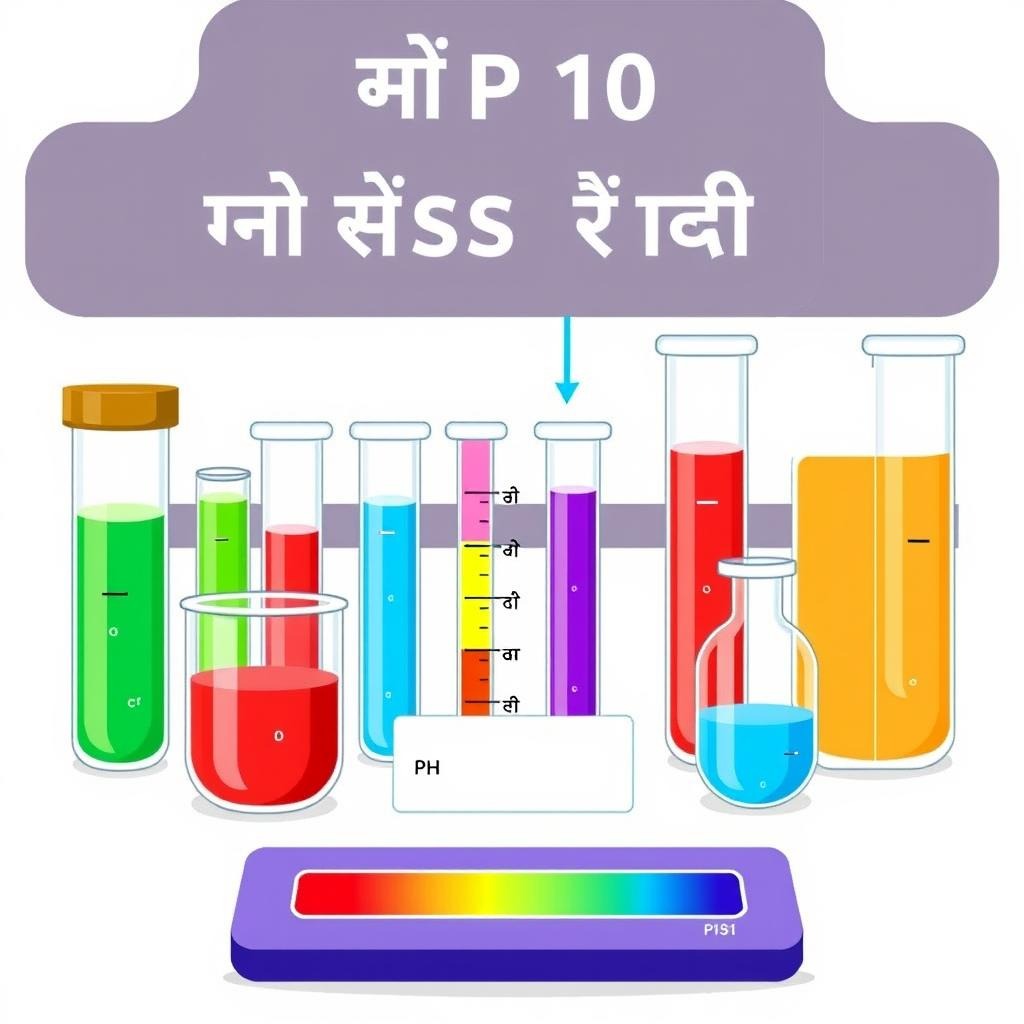
  • pH scale: pH values of common substances (HCl=1, Lemon=2.5, Pure water=7, NaOH=13)
  • Universal indicator vs litmus — color changes at different pH levels
  • Common salts: NaCl (table salt), NaHCO₃ (baking soda), Na₂CO₃ (washing soda), CaOCl₂ (bleaching powder) — preparation and uses
  • Chlor-alkali process: 2NaCl + 2H₂O → 2NaOH + Cl₂↑ + H₂↑ — products and uses

⚗️ Metals & Non-Metals (Ch 3)

  • Physical vs chemical properties comparison table — must be memorized
  • Reactivity series: K > Na > Ca > Mg > Al > Zn > Fe > Pb > H > Cu > Hg > Ag > Au
  • Extraction of metals: Enrichment → Calcination/Roasting → Reduction → Refining
  • Electrolytic refining: anode (impure), cathode (pure), electrolyte (metal salt solution)

🧬 Carbon & Its Compounds (Ch 4)

  • Covalent bonding: 4 valence electrons → 4 covalent bonds → versatile tetravalency
  • Homologous series: Alkanes (CₙH₂ₙ₊₂), Alkenes (CₙH₂ₙ), Alkynes (CₙH₂ₙ₋₂)
  • Functional groups: Alcohol (-OH), Carboxylic acid (-COOH), Aldehyde (-CHO), Ketone (>C=O)
  • Esterification reaction + Saponification (soap formation) — must write with structural formulas
🎯 Exam Tip: For Chemistry reactions, use the “Write-Cover-Recall” method: Write the reaction on one side of a card, cover it, recall from memory, then check. Do this 3 times per reaction — after 24 hours you’ll remember 80% of reactions effortlessly.

🧬 Biology: Diagrams, Definitions & Explanation

Biology contributes the highest marks (38%) with 5 chapters — Life Processes (Ch 5), Control & Coordination (Ch 6), How Do Organisms Reproduce (Ch 7), Heredity (Ch 8), and Our Environment (Ch 13). Drawing skills and process understanding are the keys to scoring full marks.

❤️ Life Processes (Ch 5)

  • Nutrition: Photosynthesis equation + steps (light/dark reactions), Human digestive system diagram
  • Respiration: Aerobic vs anaerobic, Glycolysis → Krebs cycle → Electron transport chain — flow chart
  • Circulation: Human heart diagram with 4 chambers, Double circulation, Blood vessels (arteries vs veins)
  • Excretion: Nephron diagram — structure and function, Kidney as excretory organ

🧠 Control & Coordination (Ch 6)

  • Neuron diagram: dendrite → cell body → axon → nerve ending — label + function of each
  • Reflex arc: stimulus → receptor → sensory neuron → spinal cord → motor neuron → response
  • Human brain: cerebrum, cerebellum, medulla oblongata — location and functions
  • Plant hormones: Auxin (growth), Gibberellin (stem elongation), Cytokinin (cell division), Abscisic acid (dormancy)

🌱 How Do Organisms Reproduce (Ch 7)

  • Asexual reproduction: Binary fission (Amoeba), Budding (Hydra), Fragmentation (Spirogyra), Regeneration (Planaria)
  • Sexual reproduction in plants: Flower diagram with pistil, stamen, fertilization process
  • Human reproductive system: Male (testis, vas deferens, urethra) and Female (ovary, oviduct, uterus)
  • Contraception: Barrier (condom), Chemical (IUD), Surgical (vasectomy, tubectomy) — advantages

🧬 Heredity & Evolution (Ch 8)

  • Mendel’s laws: Law of Dominance, Law of Segregation, Law of Independent Assortment
  • Monohybrid cross (3:1 ratio) and Dihybrid cross (9:3:3:1 ratio) — Punnett square practice
  • Sex determination: XX (female) vs XY (male) — why fathers determine child’s sex
  • Evolution: Natural selection, Speciation, Fossil evidence, Homologous vs Analogous organs

🌍 Our Environment (Ch 13)

  • Food chain and food web — 10% energy transfer law (Trophic levels)
  • Ozone layer depletion: CFCs → O₃ breakdown → UV radiation increase
  • Waste management: Biodegradable vs non-biodegradable — 3R principle (Reduce, Reuse, Recycle)
⭐ Pro Strategy: For biology diagrams, use a transparent sheet to trace and label. Practice each diagram at least 5 times — the first 2 times with labels, next 3 times without looking. In the exam, draw with a sharp pencil first, then darken with pen. Proper labeling gets you 2 additional marks per diagram.

📝 Previous Year Questions: Maximize Your Practice

Solving previous year questions (PYQs) is the most effective way to understand the MP Board exam pattern. Here is the 7-year trend analysis for Class 10 Science:

Year Key Changes Student Feedback
2020 Traditional 3-hour paper, 6 long-answer questions More theory-based, fewer MCQs
2021 Reduced syllabus due to COVID, objective-heavy Easier paper, higher scores
2022 Full syllabus returned, MCQs = 40% of paper Balanced paper, moderate difficulty
2023 Assertion-Reason questions introduced Tricky reasoning questions, 30% students lost 5+ marks
2024 Case-based questions included, more diagrams Application-based, NCERT focused
2025 All 13 chapters included, 80:20 theory-practical split Direct NCERT questions rewarded rote learners
2026 Full NCERT-based, assertion-reason + case-based + MCQs NCERT mastery = 90%+ score guaranteed
🎯 Exam Tip: Set a weekly PYQ target. Week 1-2: Solve 2020-2021 papers. Week 3-4: Solve 2022-2023 papers. Week 5-6: Solve 2024-2026 papers. Mark skipped questions and revisit them in Phase 3 revision. Download MP Board previous year papers from mpboard.ai.

🔄 3-Phase Revision Cycle for Science

A structured revision cycle ensures nothing is forgotten on exam day. Here is the proven 3-phase revision cycle that top scorers use:

Technique How It Works Best For
Daily Active Recall After studying each chapter, close the book and write everything you remember in 5 minutes Biology definitions, chemical reactions
Feynman Technique Explain the concept in simple language to a friend or yourself. If you can’t explain simply, you don’t understand it well enough Physics concepts, Biology processes
Spaced Repetition Revise each chapter at 1-day, 7-day, and 30-day intervals. Use a calendar to schedule reviews All subjects, formula retention
Diagram from Memory Attempt to draw and label diagrams without looking. Check accuracy after completion Heart, Nephron, Neuron, Eye diagram
Peer Quizzing Study with 2-3 friends. Take turns asking questions from different chapters MCQs, Viva preparation
Mock Tests Solve full 80-mark paper in exactly 3 hours under exam conditions Time management, exam readiness

🎯 Exam Day Strategy & Common Mistakes

📌 Day Before the Exam

  1. Review only formula sheets and diagram labels — NO new topics
  2. Keep your admit card, pens, pencil, sharpener, eraser, scale, and compass ready
  3. Sleep by 9:30 PM — 8 hours of sleep improves recall by 20-30%
  4. Set two alarms for 5:30 AM

✍️ In the Exam Hall

  1. First 15 minutes: Read the entire question paper. Mark MCQs you’re confident about
  2. Start with Section A (MCQs): 20 minutes max. Move on if stuck — don’t waste time
  3. Short answers (Section B): 45 minutes. 3-mark answers need 5-6 points with diagrams
  4. Long answers (Section C): 60 minutes. Each 5-mark answer needs introduction, main content with diagrams, and conclusion
  5. Last 15 minutes: Review all answers. Check spelling of scientific terms, diagram labels, equation balancing
Common Mistake How to Avoid
❌ Not attempting numericals ✅ Write the formula, substitute values, calculate — even partial steps get marks
❌ Unlabeled or messy diagrams ✅ Use pencil for drawing, label with pen. At least 6-8 labels per diagram
❌ Wrong sign conventions in Physics ✅ Remember: distances measured from mirror/lens center are positive in direction of incident light
❌ Balancing equations incorrectly ✅ Count atoms on both sides before and after — use coefficient multiples
❌ Spending too much time on one question ✅ Allocate time per mark: 1 mark = 1.5 minutes, 3 marks = 5 minutes, 5 marks = 9 minutes
❌ Not reading the question carefully ✅ Underline key words: “explain”, “differentiate”, “draw”, “list”, “state”

❓ Frequently Asked Questions

Q1: Is NCERT enough for MP Board Class 10 Science?

Answer: Yes — 90% of the MP Board Science paper comes directly from NCERT textbooks. Every question, from MCQs to long answers, is based on NCERT content. However, we recommend supplementing with MP Board previous year papers (available on mpboard.ai) to understand the exam pattern and question style.

Q2: How many hours should I study Science daily?

Answer: Aim for 2.5-3 hours of focused Science study daily. Break it into: 1 hour concept study (morning), 1 hour practice (afternoon), and 30-45 minutes revision (evening). During Phase 2 and 3, increase to 3.5 hours including mock tests.

Q3: How to memorize chemical reactions and equations?

Answer: Use the 3-5-7 method: Write each reaction 3 times on Day 1, review on Day 3 (write 2 times), review on Day 5 (write 1 time), and recall from memory on Day 7. Create a reaction journal with color coding: Blue for combination, Red for decomposition, Green for displacement, Orange for double displacement.

Q4: Which chapter is most important in Class 10 Science?

Answer: Life Processes (Ch 5) and Electricity (Ch 11) are the most important — together they account for approximately 25% of the total marks. Chemical Reactions (Ch 1) and Light (Ch 9) are also high-weightage chapters. However, every chapter has at least one guaranteed question — don’t skip any chapter entirely.

Q5: How to score full marks in diagram-based questions?

Answer: Practice each diagram at least 5 times before the exam. Use a sharp HB pencil for drawing, label with a blue/black pen. Draw diagrams large enough to show all parts clearly. Include 6-8 labels minimum. Write a brief description below the diagram explaining the process. Practice: heart, nephron, neuron, brain, eye, flower, digestive system.

Q6: What about practical exam and viva?

Answer: The practical exam carries 20 marks — 10 for practical work and 10 for viva. Key experiments to practice: (1) pH of different solutions using pH paper, (2) Ohm’s Law verification, (3) Preparing temporary mount of cheek cells, (4) Finding focal length of convex lens. For viva, revise the theory behind each practical experiment. Practical marks are easy to score — don’t lose them!

Q7: Can I score 90% if I start preparing 2 months before the exam?

Answer: Yes — with a structured 60-day plan, you can score 90%+. Dedicate 4 hours daily to Science (2 hours theory + 1 hour numericals + 1 hour revision). Focus on solving PYQs from Day 1 — don’t wait to “finish” the syllabus first. Use mpboard.ai chapter notes for quick revision of all 13 chapters.

Q8: How to manage time during the Science exam?

Answer: Time allocation for 3-hour (180 min) paper: MCQs (30 minutes for 20 questions), Very Short Answers (25 minutes for 4 questions), Assertion-Reason (20 minutes for 4 questions), Short Answers (40 minutes for 6 questions), Long Answers (40 minutes for 4 questions), Case-Based (15 minutes for 2 questions), Review (10 minutes). Adjust based on your strengths — but never spend more than 2 minutes per mark.

🎯 Your 5-Step Action Plan for 90%+ in Science

  1. Step 1: Download the complete Class 10 Science syllabus from mpboard.ai and mark all 13 chapters
  2. Step 2: Create a 90-day study timetable following the 3-phase plan above
  3. Step 3: Read each NCERT chapter twice — once for understanding, once for notes
  4. Step 4: Solve at least 5 previous year papers before the exam day
  5. Step 5: Practice 3 full-length mock tests in exam conditions (3 hours, no breaks)

Published by mpboard.ai — Your Complete MP Board Study Partner. Visit mpboard.ai for chapter notes, PYQs, video lessons, and live updates.

MP Board 2026: कक्षा 10वीं गणित Basic/Standard और 11वीं म…

🧮 MP Board 2026: कक्षा 10वीं गणित Basic/Standard और कक्षा 11वीं में गणित विषय चयन — नए नियम

MP Board of Secondary Education (MPBSE) ने कक्षा 10वीं के छात्रों के लिए गणित (Basic/Standard) विषय से जुड़े नियमों को स्पष्ट करते हुए एक आदेश जारी किया है। साथ ही, यह भी बताया गया है कि कक्षा 10वीं में कौन सा गणित लेने पर कक्षा 11वीं में क्या ऑप्शन रहेंगे।

📋 मुख्य बातें

  • गणित Basic (241) — आसान स्तर, उन छात्रों के लिए जो आगे गणित नहीं पढ़ना चाहते
  • गणित Standard (041) — सामान्य स्तर, उन छात्रों के लिए जो कक्षा 11वीं में गणित लेना चाहते हैं
  • कक्षा 10वीं की द्वितीय परीक्षा में भी यही Basic/Standard का विकल्प रहेगा
  • कक्षा 11वीं में गणित विषय के चयन के लिए Standard (041) लेना अनिवार्य है

👨‍🎓 किसके लिए जरूरी?

कक्षा 10वीं के सभी छात्र जो 2026 में MP Board की हाईस्कूल परीक्षा दे रहे हैं और जो कक्षा 11वीं में गणित पढ़ने की सोच रहे हैं, उनके लिए यह आदेश बहुत महत्वपूर्ण है।

📄 ऑफिशियल PDF

पूरा आदेश यहाँ पढ़ें: MPBSE Maths Basic/Standard Order

📌 टिप: अगर आप आगे 11वीं में गणित, Physics, Engineering, या Science लेना चाहते हैं तो Standard (041) ही चुनें। Basic (241) सिर्फ उनके लिए है जो 10वीं के बाद गणित नहीं पढ़ना चाहते।

📚 Related Study Material

📚 Related Study Material

📚 Related Study Material

MP Board 2026-27: कक्षा 9-12 का नया Syllabus, Marking Sch…

📚 MP Board 2026-27: कक्षा 9वीं से 12वीं तक का नया Syllabus, Marking Scheme और Practical Work जारी

MP Board of Secondary Education (MPBSE) ने शैक्षणिक सत्र 2026-27 के लिए कक्षा 9वीं, 10वीं, 11वीं और 12वीं के सभी विषयों का नया पाठ्यक्रम (Syllabus), अंकयोजना (Marking Scheme) और प्रायोजना/प्रायोगिक कार्य (Project & Practical Work) जारी कर दिया है। ये डॉक्यूमेंट MPBSE की आधिकारिक वेबसाइट पर अपलोड कर दिए गए हैं।

📋 क्या जारी हुआ है?

MPBSE ने तीन महत्वपूर्ण डॉक्यूमेंट जारी किए हैं:

  1. पाठ्यक्रम / Syllabus — कक्षा 9वीं से 12वीं तक के सभी विषयों का पूरा syllabus (जिसमें English, Hindi, Maths, Science, Social Science और अन्य सभी विषय शामिल हैं)
  2. अंकयोजना / Marking Scheme — हर विषय के theory और internal assessment के अंकों का बंटवारा
  3. प्रायोजना/प्रायोगिक कार्य / Project & Practical Work — Practical exams और project work के लिए guidelines

👨‍🎓 किसे प्रभावित करता है?

यह कक्षा 9वीं, 10वीं, 11वीं और 12वीं के सभी छात्रों के लिए जरूरी है। जो भी स्टूडेंट सत्र 2026-27 में MP Board से पढ़ाई कर रहे हैं, उन्हें यह syllabus देखना चाहिए ताकि exam preparation सही दिशा में हो सके।

📄 डॉक्यूमेंट डाउनलोड करें

📌 Important Note: Syllabus पुराने सत्र से थोड़ा बदल सकता है, इसलिए नया syllabus जरूर डाउनलोड करें और अपने टीचर्स से confirm करें कि किन-किन topics में बदलाव हुआ है।

📚 Related Study Material

📚 Related Study Material

MP Board Class 10 & 12: Last 3 Months Strategy to Score 90%+

MP Board Class 10 & 12: Last 3 Months Strategy to Score 90%+ — MP Board 2026-27 exams are approaching fast, and with just about 3 months left for the annual examinations, students often feel overwhelmed and uncertain. But here’s the truth: 3 months is more than enough to go from zero to 90% if you follow the right strategy. This guide is your complete roadmap — covering smart timetable planning, subject-wise techniques, revision hacks, previous year question practice, and exam-day tips specifically tailored for MP Board students. Let’s turn these 90 days into your most productive academic phase.

📋 1. Phase 1 — Assessment & Blueprint (Days 1-5)

The biggest mistake students make is jumping directly into random studying. The first 5 days of your 90-day plan must be dedicated to understanding what you’re up against.

Step 1 — Gather Your Syllabus

Download the official MP Board syllabus for your class and subject. Mark every chapter with its weightage (marks distribution). This instantly tells you which chapters deserve more time.

Step 2 — Honest Self-Assessment

Go through each subject and classify chapters into three categories:

  • 🟢 Strong: Topics you’re confident about — quick revision only
  • 🟡 Moderate: Topics you’ve studied but need practice — 2-3 days each
  • 🔴 Weak: Topics you’ve never studied or find difficult — prioritize first

Step 3 — Create Your 90-Day Calendar

Divide your 90 days into three 30-day blocks:

Phase Duration Focus Daily Hours
Foundation Days 1-30 Cover all weak + moderate chapters thoroughly 6-7 hours
Intensive Practice Days 31-60 PYQs, mock tests, numericals, diagram practice 7-8 hours
Revision Sprint Days 61-90 Rapid revision, formula sheets, full-length tests 8-10 hours
🎯 Exam Tip: In Phase 1, focus on NCERT textbooks only. MP Board questions are heavily NCERT-based. Don’t waste time on reference books until you’ve mastered NCERT completely.

⏰ 2. Smart Daily Timetable for Class 10 & 12

A consistent daily routine is the backbone of exam preparation. Here’s a proven timetable that balances study, rest, and revision:

Time Activity Duration
5:00 AM – 5:30 AM Wake up, freshen up, light exercise 30 min
5:30 AM – 7:00 AM Study Session 1 — Difficult subject (Maths/Science) 1.5 hrs
7:00 AM – 8:00 AM Breakfast, get ready for school 1 hr
8:00 AM – 2:00 PM School hours (pay attention in class!) 6 hrs
2:00 PM – 3:00 PM Lunch + rest 1 hr
3:00 PM – 4:30 PM Study Session 2 — Theory subject revision 1.5 hrs
4:30 PM – 5:00 PM Tea break + walk 30 min
5:00 PM – 7:00 PM Study Session 3 — Practice (PYQs/Numericals) 2 hrs
7:00 PM – 8:00 PM Dinner + family time 1 hr
8:00 PM – 9:30 PM Study Session 4 — Light revision or language 1.5 hrs
9:30 PM – 10:00 PM Revise what you studied today (5 min per subject) 30 min
10:00 PM Sleep (7+ hours essential) 7 hrs
🎯 Exam Tip: Your brain is most alert between 5-7 AM. Use this golden window for your weakest subject. Never study more than 2 hours continuously — take a 5-10 minute break every 60 minutes.

📚 3. Subject-Wise Strategy

🔢 Mathematics (Class 10) / Maths (Class 12)

Mathematics is the most scoring subject if you practice consistently. Formulas are your best friends — write them down daily.

  • Solve NCERT examples first — every single one
  • Then solve NCERT exercise questions. Mark questions you got wrong
  • Practice 3 previous year papers per week (timed — 3 hours)
  • Create a formula sheet on one A4 page — revise it every morning
  • Focus on: Algebra, Geometry (Class 10) / Calculus, Vectors (Class 12) — high weightage

🔬 Science (Class 10) / Physics, Chemistry, Biology (Class 12)

  • Physics: Focus on numericals and derivations. Practice circuit diagrams, ray diagrams, and graph-based questions. Make concept maps for each chapter
  • Chemistry: Learn reactions, equations, and the periodic table trends. Write reactions 3-4 times to memorize. Focus on Organic Chemistry naming and reactions
  • Biology (Class 10/12): Diagrams are your scoring points. Practice diagrams daily — label them perfectly. Use mnemonics for classification and processes
  • For Class 10: Light, Human Eye, Electricity, Carbon Compounds are high-weightage chapters

🌍 Social Science (Class 10)

  • Divide into History, Geography, Political Science, Economics
  • Create timeline charts for History — events, dates, personalities
  • Map work practice — mark locations, rivers, mineral belts daily
  • Write answers in points — MP Board examiners love point-wise answers

📖 Languages (Hindi, English, Sanskrit)

  • Read textbook lessons thoroughly — questions often come directly
  • Practice writing — grammar, essay, letter, story
  • Learn poetic devices, figures of speech, and summaries
  • For Hindi: Practice गद्यांश and पद्यांश comprehension daily

📘 Key Fact: MP Board Class 12 Science subjects (Physics, Chemistry, Biology/Maths) carry 70 marks for theory and 30 for practicals/practical exams. A good practical score (25+) can significantly boost your overall percentage.

🗂️ 4. Previous Year Questions — Your Secret Weapon

Previous Year Questions (PYQs) are the single most effective tool for scoring 90%+ in MP Board exams. Here’s why and how to use them:

Why PYQs Matter

  • Pattern Recognition: MP Board repeats question patterns — sometimes the EXACT same question from previous years
  • Weightage Analysis: You’ll quickly see which chapters have more marks allocated
  • Answer Format: Learn how MP Board expects answers — marking scheme, key points, diagrams
  • Time Management: Practicing with a timer teaches you to write fast and efficiently

PYQ Practice Strategy

Week PYQ Focus Approach
Week 5-6 Chapter-wise PYQs Solve questions right after studying a chapter
Week 7-8 Full subject PYQs Solve full question papers, timed (3 hrs)
Week 9-12 Mixed revision + PYQs Solve 2-3 full papers per subject per week
⭐ Pro Strategy: After solving each PYQ paper, spend 30 minutes analyzing your mistakes. Create a “Mistake Log” — write down every error and the correct approach. This alone can boost your score by 10-15%!

🔄 5. The 3-Phase Revision Cycle

Most students study once and never revise — that’s why they forget. Use this proven 3-phase revision cycle to lock information in your long-term memory:

Phase 1 — Daily Revision (10 minutes per subject)

At the end of each day, quickly go through what you studied. Don’t re-read — just recall. This is called active recall and it’s 3x more effective than re-reading.

Phase 2 — Weekly Revision (Sunday)

Every Sunday, revise everything studied in the past week. Solve a mini test (30-40 questions covering the week’s topics). This is when you solidify learning.

Phase 3 — Mega Revision (Days 61-90)

In the last 30 days, your ONLY job is revision and tests. Cover all subjects in rotation. Each subject gets 2-3 days. Go through your formula sheets, mistake log, and important diagrams.

Powerful Revision Techniques

Technique How It Works Best For
Active Recall Close the book, recall from memory Theory subjects
Feynman Technique Explain the topic to someone in simple words Complex concepts
Mind Maps Create visual connections between topics Biology, Social Science
Spaced Repetition Review at increasing intervals: 1 day → 3 days → 7 days → 30 days All subjects
Write & Recite Write answers from memory, then check Languages, Social Science

✅ 6. Exam Day Tips & Common Mistakes

Day Before the Exam

  • Don’t study new topics — only revise your formula sheet and summary notes
  • Pack your admit card, stationery (blue pen, black pen, pencil, scale, eraser, sharpener, geometry box)
  • Sleep by 9 PM — 8+ hours of sleep is non-negotiable
  • Set two alarms and inform family to wake you up

Exam Hall Strategy

  1. First 15 minutes: Read the entire question paper carefully. Mark which questions you’ll attempt
  2. Start with your strength: Begin with the section or question you’re most confident about
  3. Time allocation: Divide total time by marks — spend proportionally. For a 70-mark, 3-hour paper → ≈2.5 minutes per mark
  4. Diagrams: Draw diagrams even for short-answer questions when relevant — they fetch extra marks
  5. Last 15 minutes: Review your answers. Check for calculation errors, missed steps, and neatness

Common Mistakes Students Make (And How to Avoid Them)

❌ Mistake ✅ Fix
Studying without a timetable Create a daily + weekly schedule and stick to it
Ignoring NCERT MP Board = NCERT. Master NCERT before any other book
Not practicing writing Write full answers, not just read — handwriting speed matters
Skipping revision Use active recall — 10 min daily revision per subject
Ignoring diagrams Practice diagrams daily — they can get you 5-10 extra marks
Overthinking in exam hall Deep breaths. Start with easy questions. Build confidence first
🎯 Exam Tip: In MP Board exams, presentation matters more than you think. Use headings, underline keywords, draw boxes around formulas, and leave space between answers. A well-presented answer sheet can fetch 5-8% extra marks from benevolent examiners.

📊 7. Previous Year Questions Trend (2020-2026)

Analysis of last 7 years of MP Board question papers reveals clear patterns. Here’s what the trends tell us:

Year Pattern Observed Student Tip
2020 Traditional — mostly NCERT direct questions Focus on NCERT back-exercise questions
2021 Reduced syllabus due to COVID Check current syllabus — topics may be added/removed
2022 Mix of objective + subjective Prepare for MCQs, VSA, SA, and LA type questions
2023 Application-based questions increased Don’t mug up — understand concepts, practice application
2024 More numericals & diagram-based questions Practice numericals daily, master all diagrams
2025 Case-based and competency questions introduced Read newspaper/current affairs for case studies
2026 (Expected) Likely continuation of 2025 pattern with more competency focus Solve sample papers and NCERT exemplar

❓ 8. Frequently Asked Questions

Q: Can I score 90% if I start now with only 3 months left?

Absolutely. Three months is 90 days. If you study 7 hours daily, that’s 630 hours — enough to master any class 10 or 12 syllabus multiple times. Thousands of MP Board students have done it. The key is consistency, not intensity.

Q: How many hours should I study daily for 90%?

6-7 focused hours in the first phase, 7-8 in the second phase, and 8-10 in the final revision sprint. Quality > quantity — a focused 6-hour day beats a distracted 12-hour day every time.

Q: Is NCERT enough for MP Board exams?

Yes, for 90% of questions. MP Board questions are primarily NCERT-based. However, for Mathematics and Science, solving NCERT Exemplar and previous year papers gives you the extra edge to score 90%+.

Q: How many previous year papers should I solve?

At least 10 full-length papers per subject. Solve the last 5 years’ papers twice — once during practice phase (untimed) and once during revision phase (timed).

Q: Which subjects should I prioritize?

Prioritize based on your weakness. But generally: Mathematics/Science requires the most practice time. Languages require consistent but lighter effort. Social Science needs memorization with understanding. Allocate 40% time to your weakest subject, 30% to moderate, 20% to strong, and 10% to languages.

Q: What if I get stuck on a difficult topic?

Don’t spend more than 2 days on a single topic. Mark it, move on, and come back after covering easier topics. Sometimes, learning related topics first makes the difficult one easier. Use YouTube video tutorials for tough concepts — visual explanations often help where textbooks don’t.

🎯 Final Exam Tip: Your mindset matters more than your preparation. Believe you can score 90%. Tell yourself every morning: “I am capable. I am prepared. I will succeed.” Confidence is the invisible 10% that separates 80% from 90% scorers.

📘 Key Fact: According to MP Board data, students who solve at least 5 previous year papers before the exam score an average of 15-18% higher than those who don’t. Solving PYQs isn’t optional — it’s your biggest competitive advantage.

🎯 Conclusion — Your 90-Day Action Plan

Scoring 90%+ in MP Board exams is not luck — it’s a science. Follow these 5 commandments:

  1. Know Your Syllabus: Mark weightage, identify weak areas, create a 90-day plan
  2. Master NCERT: No book matters more. Every concept, every example, every exercise
  3. Practice Daily: Mathematics and numerical subjects need daily practice — no excuses
  4. Solve PYQs Religiously: They are the closest thing to your actual exam
  5. Revise, Revise, Revise: Daily, weekly, and mega revision — this is what separates toppers from average students

Start today. Not tomorrow. Not next week. Today. The next 90 days will pass anyway — make them count. Your 90% score is waiting for you at mpboard.ai!

📚 Related Study Material

📚 Related Study Material

MP Board 2026-27: Class 10 & 12 Online Registration Guide

MP Board 2026-27 Academic Session — Madhya Pradesh Board of Secondary Education (MPBSE) has released the official guidelines for Class 10 and Class 12 online registration, admission, and exam fee payment for the academic session 2026-27. Every year, over 15 lakh students register through the MPBSE portal at mpbse.nic.in and the MP Online portal. This complete guide covers eligibility, important dates, fee structure, step-by-step online application process, required documents, subject selection rules, private candidate registration, improvement and compartment exam procedures, and everything else you need to know for a smooth admission in the 2026-27 academic session. Whether you are a regular student, a private candidate, or appearing for improvement exams — this comprehensive guide has you covered from start to finish.

📅 1. Important Dates 2026-27

The MPBSE has announced the following tentative schedule for the academic session 2026-27. Students and schools must strictly adhere to these deadlines to avoid late fees or rejection of applications. The board has streamlined the registration process this year with additional verification steps, so starting early is strongly recommended.

Event Tentative Dates Status
Online Registration Begins (Class 10 & 12) July 2026 ✅ Ongoing
Last Date for Registration (Without Late Fee) September 2026 ⏳ Upcoming
Last Date with Late Fee October 2026 ⏳ Upcoming
Application Correction Window November 2026 ⏳ Upcoming
Admit Card Release January-February 2027 ⬜ Not Announced
MP Board Main Exams 2027 February-March 2027 ⬜ Not Announced
Result Declaration (Tentative) April-May 2027 ⬜ Not Announced
🎯 Important Tip: Do not wait until the last date to register. Schools often close their internal deadlines 2-3 weeks before the official last date to allow time for data verification, photograph uploads, and fee reconciliation. Start the application process as soon as your school announces it. If you are a private candidate, avoid the late fee rush by applying at least 2 weeks before the deadline — the MPBSE portal experiences heavy traffic in the final days and may become slow or temporarily unavailable.

✅ 2. Eligibility Criteria

Before filling the online application, ensure that you meet the following eligibility requirements set by MPBSE for the academic session 2026-27. These rules apply to all students across the state, with minor exceptions for exceptional circumstances such as medical grounds or sports quota.

For Class 10 (High School) — HSC Examination

  • The student must have passed Class 9 from a school affiliated with MPBSE or any recognized board. A minimum of 33% marks in each subject in Class 9 is required for promotion to Class 10.
  • The student must be enrolled in a school affiliated with MPBSE for the 2026-27 session. Schools must have valid affiliation with the board for the current academic year.
  • Minimum attendance requirement: 75% of total working days, calculated from the date of admission to the end of the academic session. This is relaxable by up to 10% for genuine medical reasons with a doctor’s certificate.
  • Age requirement: Minimum 14 years as of January 1, 2027. There is no upper age limit for regular or private candidates.
  • For students migrating from other state boards: valid migration certificate from the previous board is mandatory.

For Class 12 (Higher Secondary) — HSSC Examination

  • The student must have passed Class 10 (High School) from MPBSE or any recognized board with a minimum of 33% marks in aggregate.
  • Must be enrolled in a Class 11 and 12 school affiliated with MPBSE for the 2026-27 session. Regular attendance in Class 11 is mandatory before Class 12 registration.
  • Minimum attendance: 75% of the total working days in the academic session. This can be relaxed to 60% in genuine medical cases with proper documentation.
  • Age requirement: Minimum 16 years as of January 1, 2027. No upper age limit.
  • For students changing streams (e.g., Science to Commerce): written permission from the school principal and parent consent is required.

For Private Candidates

  • Any student who could not complete their schooling through regular mode, left school mid-year, or failed in the previous attempt and wants to re-appear can apply as a private candidate.
  • Must have passed the qualifying examination (Class 9 for Class 10 registration, and Class 10 for Class 12 registration) from a recognized board with a minimum of 33% marks.
  • Private candidates must apply through the designated MPBSE portal at mpbse.nic.in. The portal is separate from the school login system.
  • Private candidates can choose their exam center from the list of centers provided by MPBSE. The board will allocate the nearest available center based on the candidate’s address.

💰 3. Exam & Registration Fee Structure 2026-27

MPBSE has released the revised fee structure for the 2026-27 academic session. The following table shows the complete fee breakup for regular and private candidates across different categories. These fees are as per the board’s official order dated February 18, 2026, and include all examination-related charges.

Category Class 10 (High School) Class 12 (Higher Secondary)
General / OBC (Regular) ₹1,200 ₹1,500
SC / ST (Regular) ₹800 ₹1,000
Private Candidate (All Categories) ₹2,400 ₹3,000
Improvement Exam (Per Subject) ₹400 ₹500
Compartment Exam (Per Subject) ₹500 ₹600
Late Fee (After Deadline) ₹500 extra ₹500 extra
Correction Fee (Per Field) ₹100 ₹100

📘 Important Note: Fee payment must be made online through the MPBSE portal using Net Banking, Debit Card, Credit Card, or UPI. Cash payments are not accepted at the board level. Schools may collect additional fees for internal assessments, practical exams, and study materials. All fee payments generate an automatically downloadable receipt from the portal — save this receipt for future reference as it serves as proof of registration.

📝 4. Step-by-Step Online Application Process

MP Board has made the entire admission and registration process online through the MPBSE portal. The process differs slightly for regular students (whose schools file applications on their behalf) and private candidates (who apply directly). Understanding each step is essential so you can verify that your details are correctly entered in the system.

Step 1: School-Level Registration (For Regular Students)

The school administration logs into the MPBSE Online Portal using their registered school login credentials — each affiliated school has a unique School Code and password. The school enters the basic details of all eligible students: full name (as per official records), father’s name, mother’s name, date of birth, gender, category (General/SC/ST/OBC), Aadhaar number, previous class roll number, and marks obtained in the qualifying exam. Schools typically batch-upload this data using the CSV template provided by MPBSE rather than entering each student individually.

Step 2: Student Data Verification

Once the school enters the data, each student receives a printed confirmation form (or a digital copy, depending on the school) containing all their entered details. This is the most critical step — carefully check every single field: your name must match exactly with your Class 10 certificate (for Class 12 applicants), date of birth must match your Aadhaar card, father’s name and mother’s name must be spelled correctly, your category must be accurate as fee concessions depend on it, and your subject choices must align with the stream you have selected. Any mistake at this stage — even a single letter misspelled in your name — can cause serious problems during admit card issuance, exam day verification, and result declaration. If you find errors, report them to your class teacher or school administration immediately and do not sign the confirmation form until all corrections are made.

Step 3: Upload Photograph, Signature and Thumb Impression

The school scans and uploads the student’s recent passport-size photograph, signature, and thumb impression. These images will appear on your admit card and marksheet, so following the exact specifications is crucial. Image specifications:

  • Photograph: 200px × 230px dimensions, JPG or JPEG format only, maximum file size 50KB. White or light blue background is preferred. The photo must be recent (not older than 3 months) and show the full face clearly — no sunglasses, caps, or face coverings are permitted. Headphones or earphones are not allowed in the photograph.
  • Signature: 140px × 60px, JPG/JPEG format, max 20KB. The signature must be on white paper using blue or black ink. The signature should match the one you will use on your answer sheets during the exam.
  • Thumb Impression: Left hand thumb impression for Class 10 candidates, right hand thumb impression for Class 12 candidates. Size: 140px × 140px, max 30KB, JPG format. Use ink-based impression on white paper — stamp pads work best. Ensure the impression is clear with visible ridge patterns, as it is used for biometric verification during result declaration.

Step 4: Fee Payment and Receipt Generation

The school collects fees from students either in cash or through digital payment and then pays the consolidated amount online through the MPBSE payment gateway. The MPBSE portal accepts payments via Net Banking (all major banks), Debit Cards (Visa, Mastercard, RuPay), Credit Cards, and UPI (Google Pay, PhonePe, Paytm). After successful payment, the portal generates a fee receipt with a unique transaction ID. Schools should download and share individual receipts with each student. Keep a printed or digital copy of this receipt for your records — it is your proof of registration for the 2026-27 academic session.

Step 5: Final Submission and Roll Number Allocation

After the school verifies all data, uploads photographs, and completes fee payment for all students, they submit the final application batch to MPBSE through the portal. The board then processes each application — this can take 2-4 weeks depending on the volume of applications. Once approved, MPBSE assigns a unique Roll Number to each student. You will receive your roll number printed on your admit card, which is released 3-4 weeks before the exam. The roll number format typically follows: [School Code][Class Code][Serial Number].

For Private Candidates — Direct Online Application Process

If you are a private candidate (not attending regular school), you must apply directly through the MPBSE private candidate portal. The process is entirely self-service and fully online. Follow these steps carefully:

  1. Visit the official MPBSE website at mpbse.nic.in and click on the “Private Candidate Registration” link under the “Students Services” section on the homepage.
  2. Create a new account by entering a valid mobile number (for SMS notifications) and email ID (for official communication). You will receive an OTP on your phone for one-time verification.
  3. Fill in personal details carefully — full name, father’s name, mother’s name, date of birth (as per Aadhaar), permanent address with PIN code, mobile number, email, and category.
  4. Select your desired subjects based on the stream you wish to appear in. For Class 12, this is where you choose your stream — Science, Commerce, or Arts — and the corresponding subjects.
  5. Upload scanned copies of your photograph, signature, previous class marksheet, and category certificate (if applicable). Ensure all scans are clear and within the file size limits specified on the portal.
  6. Pay the prescribed application fee online using any of the available payment methods.
  7. After successful payment, the portal generates a confirmation page with your application number and transaction ID. Download and print this page — it is a critical document for future reference and correspondence with MPBSE.

📄 5. Required Documents

Before starting the application process, gather all the following documents. Having them ready in advance will save time, prevent errors, and avoid the frustration of last-minute scanning and uploading.

Document Purpose Required For
Previous Class Marksheet (Class 9 for Class 10 / Class 10 for Class 12) Proof of passing the qualifying examination Class 10 & 12
Aadhaar Card / Enrollment Number Mandatory identity verification from 2026-27 session Class 10 & 12
Caste Certificate (SC / ST / OBC) Category verification and fee concession Reserved category students
Income Certificate / BPL Ration Card Fee waiver eligibility verification BPL and economically weaker section students
Transfer Certificate (TC) from Previous School Official school leaving proof for new admissions New admission / transferred students
Passport-size Photographs (5-6 copies) Application form, admit card, and school records All students
Residence Proof (Aadhaar / Ration Card / Voter ID / Passport) Address verification and exam center allocation Private candidates
Migration Certificate (if from another board) Mandatory for students shifting from CBSE / ICSE / other state boards Inter-board transfer students

📚 6. Subject Selection Rules

Choosing the right subjects is one of the most important decisions you will make during registration. Your subject choices determine your academic stream and future career options. MPBSE offers a structured subject framework for both Class 10 and Class 12, and understanding the available combinations will help you make an informed decision.

Class 10 (High School) — Compulsory & Optional Subject Breakdown

Subject Type Available Subjects Max Marks
Compulsory Language (Subject 1) Hindi (General or Special Hindi) — mandatory for all students 100
Second Language (Subject 2) English, Sanskrit, Urdu, or any other modern Indian language offered by MPBSE (choose any one) 100
Compulsory Academic Subjects (Subjects 3, 4, 5) Mathematics, Science (Physics + Chemistry + Biology), Social Science (History + Geography + Civics + Economics) 100 each
Optional Subject (Subject 6) Computer Education, Agriculture, NCC, Music, Drawing & Painting, Home Science, Physical Education, or any other subject offered by the school 100

Class 12 (Higher Secondary) — Stream-Wise Subject Combinations

Stream Compulsory Subjects Optional Subjects (Choose 2-3)
🔬 Science (विज्ञान) Hindi, English, Physics, Chemistry Mathematics, Biology, Computer Science, Agriculture
📊 Commerce (वाणिज्य) Hindi, English, Accountancy, Business Studies Economics, Mathematics, Computer Science, Retail
🎨 Arts / Humanities (कला) Hindi, English, History, Political Science Geography, Sociology, Economics, Psychology, Home Science, Music, Drawing

👤 7. Private Candidate Registration 2026-27

Private candidates form a significant and growing portion of MP Board exam applicants — each year over 2 lakh students register through the private candidate pathway. These are students who, for various reasons, could not attend regular school but still wish to appear for the Class 10 or Class 12 board examinations. MPBSE fully supports private candidates and has created a dedicated online portal for their registration.

🎯 Key Update for 2026-27: Private candidates must now provide Aadhaar-based e-KYC verification at the time of registration. This is a new requirement introduced for the 2026-27 session to prevent fraudulent applications. Make sure your Aadhaar is linked to your registered mobile number for OTP-based verification. If you do not have an Aadhaar card, you can use your Aadhaar Enrollment ID (EID) as a temporary alternative.

Who Can Apply as a Private Candidate?

  • Students who left school before completing Class 10 or Class 12 due to financial, family, or personal reasons.
  • Students who failed in the previous board examination and want to appear again without attending regular school.
  • Students who passed Class 10 from a different board (CBSE, ICSE, or other state boards) and wish to appear for MP Board Class 12 examinations as a private candidate.
  • Candidates who have already passed the MP Board exam but want to improve their scores in specific subjects through the improvement examination pathway.
  • Adult learners or those who discontinued their education for several years and now wish to complete their schooling.

🔄 8. Improvement & Compartment Exams 2026-27

The MP Board offers two distinct pathways for students who have either passed but want better marks, or who have failed in one or more subjects. Understanding the difference between improvement and compartment exams, and knowing which one applies to your situation, is essential for making the right choice during registration.

Improvement Examination (अंक सुधार परीक्षा)

  • Available for students who have already passed the board exam (secured 33% or more in aggregate) but wish to improve their marks in up to a maximum of 3 subjects.
  • The better of the two scores — your original score in the subject and the improvement exam score — is considered for the final marksheet. Your original marksheet remains valid, and the improved score replaces only the specific subject marks.
  • The improvement exam application must be submitted along with the regular exam registration form for the same academic session. Separate registration is not permitted for improvement exams.
  • Fee: ₹400 per subject for Class 10, ₹500 per subject for Class 12.
  • Important: The improvement exam is only available for theory papers. Practical exam marks cannot be improved through this pathway.

Compartment Examination (अनु पूरक परीक्षा)

  • For students who failed in 1 or 2 subjects in the main board exam (scored below 33% in those specific subjects but passed all others).
  • Compartment exams are usually held in June-July following the main exam cycle, giving students about 2-3 months to prepare after the results are declared.
  • Students who clear the compartment exam are declared as “Pass” in the annual examination and receive a marksheet showing their updated scores.
  • Fee: ₹500 per subject for Class 10, ₹600 per subject for Class 12.
  • Critical rule: Compartment is available only if you have failed in a maximum of 2 subjects. If you fail in 3 or more subjects, you must repeat the full academic year as a regular or private candidate.

✏️ 9. Application Correction Window

MPBSE provides a limited-duration correction window after the initial application submission. This is your one and only opportunity to fix errors in your application — name spelling mistakes, incorrect date of birth, wrong subject choices, or category misclassification. Once the correction window closes, no changes are permitted under any circumstances until the next academic session.

  • The correction window typically opens in November 2026 and remains active for approximately 15 days. The exact opening date is announced on the MPBSE website.
  • Corrections are permitted in the following fields: student’s name, father’s name, mother’s name, date of birth, uploaded photograph, uploaded signature, subject selection, and category.
  • Category changes (e.g., from General to SC/ST/OBC or vice versa) require re-upload of supporting documents, which must be verified and approved by the school principal.
  • A nominal correction fee of ₹100 per field is applicable. The fee is non-refundable even if the correction request is rejected due to insufficient documentation.
  • For regular students: correction requests must be initiated by the school on your behalf. You cannot directly edit the application. Contact your school administration during the correction window period.
  • For private candidates: corrections can be made directly through the private candidate portal using your login credentials.
💡 Pro Tip: Double-check your name exactly as it appears on your Aadhaar card. Any discrepancy — even a single character difference — between your name on the MP Board certificate and your Aadhaar card can cause serious issues during higher education admissions (college applications) and competitive exams like NEET, JEE, CUET, and state-level entrance tests. The same applies to your date of birth — ensure it is consistent across all official documents.

💪 10. Preparation Tips & Important Guidelines for 2027 Exams

Registration is just the first step toward your board examinations. Once your registration is confirmed, it is time to focus on exam preparation. Here are expert preparation tips and essential guidelines to help you score well in the MP Board 2027 exams:

30-Day Exam Preparation Plan

Phase Duration Activities
Phase 1: Syllabus Coverage July to November 2026 Complete all NCERT textbook chapters. Make handwritten notes for each chapter.
Phase 2: Revision & Practice December 2026 to January 2027 Solve MP Board previous year papers (2017-2026). Practice writing answers within time limits.
Phase 3: Mock Tests February 2027 (Exam month) Take full-length mock tests. Focus on weak areas and time management.

Essential Exam Preparation Tips

  • Start early: The MP Board 2027 syllabus is vast across all streams. Begin your preparation in July itself — do not wait for the exams to approach. A consistent 4-5 hours of daily study from the beginning of the academic session will be far more effective than 10-12 hour cramming sessions in February.
  • Use NCERT textbooks as your primary resource: MP Board questions are directly based on NCERT textbooks for most subjects. Read each chapter thoroughly, solve all in-text questions and exercises, and pay special attention to the examples and diagrams.
  • Solve previous year papers: Download and solve at least the last 10 years of MP Board question papers (2017-2026). This will help you understand the exam pattern, frequently asked questions, marking scheme, and the type of language expected in answers.
  • Master the art of answer writing: In MP Board exams, presentation matters. Use headings, sub-headings, bullet points, and diagrams where appropriate. Underline key terms with a pencil. Write neatly in legible handwriting — examiners appreciate well-structured answers.
  • Create a realistic timetable: Allocate specific time slots for each subject based on your strengths and weaknesses. Study your weaker subjects in the morning when concentration is highest, and practice writing answers in the evening.
  • Take care of your health: Board exam preparation is a marathon, not a sprint. Get 7-8 hours of sleep daily, eat nutritious meals, take short breaks every 90 minutes, and do light exercise or meditation to manage stress.

❓ 11. Frequently Asked Questions (FAQs)

Q1: How can I register for MP Board Class 10 or 12 exams for the 2026-27 session?

Registration for regular students is done by your school through the MPBSE online portal using the school’s login credentials. You do not need to apply individually as a regular student — your school handles everything from data entry to fee payment. However, you must provide all required documents and pay the fee to your school. Private candidates can register directly at mpbse.nic.in under the “Private Candidate Registration” section in the Students Services menu.

Q2: What is the last date for MP Board registration 2026-27?

The registration process without late fee closes in September 2026. After that, late fee applications are accepted until October 2026 with an additional late fee of ₹500. Exact dates are announced on the MPBSE official website at least 30 days before the deadline. Check mpbse.nic.in regularly for the latest circulars and notifications.

Q3: Can I change my subject after submitting the application?

Yes, subject changes are permitted during the correction window that opens in November 2026. However, only subject additions or deletions within the same academic stream are allowed — for example, you can switch from Mathematics to Biology within the Science stream, but you cannot change from Science to Commerce after the initial registration. Changing streams entirely is not permitted once the registration is submitted.

Q4: Can I apply for improvement exam along with regular registration?

Yes, improvement exam applications are filed alongside the regular exam registration for the same academic session. If you have already passed Class 10 or Class 12 in a previous session and want to improve your marks in specific subjects (up to 3 subjects), select the “Improvement” option during the registration process. Separate improvement-only registration is not available — it must be done concurrently with the regular registration cycle.

Q5: Is Aadhaar mandatory for MP Board registration 2026-27?

Yes, Aadhaar has been made mandatory for all students appearing in MP Board examinations from the 2026-27 session onwards. Both regular and private candidates must provide their 12-digit Aadhaar number at the time of registration. The board will perform online Aadhaar authentication via OTP sent to the registered mobile number. If a student does not have an Aadhaar card, the Aadhaar Enrollment ID (EID) printed on the enrollment slip can be used as a temporary alternative until the actual Aadhaar is issued.

Q6: What is the total fee for private candidates?

Private candidates must pay ₹2,400 for Class 10 registration and ₹3,000 for Class 12 registration. These fees cover all subject examination charges. Unlike regular students, there is no category-based fee concession for private candidates — the fee is uniform across all categories. Additional charges apply for late registration (₹500 extra) and any corrections (₹100 per field).

Q7: Can I apply for compartment if I fail in 3 or more subjects?

No, compartment examinations are only available if you have failed in a maximum of 2 subjects. If you fail in 3 or more subjects in the main board exam, you are not eligible for the compartment exam. In that case, you must repeat the entire academic year — either as a regular student (re-enroll in school) or as a private candidate (re-register through the private candidate portal). This is an important MPBSE rule that students should be aware of while planning their exam strategy.

Q8: How can I check my registration status?

Regular students can check their registration status by asking their school administration or class teacher. Schools have access to the MPBSE portal and can check the status of each student’s application at any time. Private candidates can check their registration status by logging into the private candidate portal using their application number and date of birth. The portal shows the current status — whether it is pending, under verification, approved, or rejected with reasons.

Q9: What should I do if my name is misspelled on the application?

If you discover that your name or any other personal detail is misspelled on the submitted application, do not panic. Name corrections can be made during the correction window in November 2026. Visit your school administration as soon as you discover the error and request a correction. The school principal must approve the correction request, and you will need to provide supporting documents such as your Aadhaar card, birth certificate, or previous class marksheet to verify the correct spelling.

Q10: Is there any fee waiver or concession for economically weaker students?

SC and ST students receive a concession on the exam fee as shown in the fee table in Section 3 above. BPL (Below Poverty Line) category students may be eligible for a full fee waiver under specific state government schemes such as the Mukhya Mantri Medhavi Vidyarthi Yojana or the Rajya Shiksha Kosh scholarship. Contact your school administration for detailed information on available fee waivers and the application process. You may need to provide your BPL ration card or income certificate.

Q11: Can I change my exam center after registration?

Exam centers are allocated by MPBSE based on your school’s location (for regular students) or your registered address (for private candidates). Changes to the allocated exam center are generally not permitted. Only in exceptional circumstances — such as a genuine medical emergency requiring treatment in a different city, or a family relocation — can a center change be requested through the school authorities. Such requests must be supported by valid documentation and are subject to MPBSE approval.

Q12: When will the MP Board 2027 admit card be released?

Admit cards for the MP Board 2027 examinations are typically released 3-4 weeks before the exams begin, which would be around January to February 2027. Schools can download admit cards for all their registered students from the MPBSE portal using their school login. Private candidates can download their admit cards from the MPBSE website using their registered application number and date of birth. Admit cards contain the student’s name, roll number, photograph, exam center details, subject list, and important instructions for exam day. You must carry a printed copy of your admit card to the exam hall — digital copies are not accepted.

Q13: What documents do I need to carry to the exam hall?

On the day of the MP Board exam, you must carry: (1) your printed admit card (mandatory — no exceptions), (2) a government-issued photo ID card (Aadhaar, School ID, or Voter ID), (3) your own stationery items (blue/black ballpoint pens, pencils, eraser, scale, geometry box), and (4) a transparent water bottle. Mobile phones, smartwatches, calculators (unless specifically allowed for certain subjects), and any electronic devices are strictly prohibited inside the exam hall.

Q14: Can I appear for Class 12 as a private candidate if I cleared Class 10 from CBSE?

Yes, absolutely. Students who have passed Class 10 from CBSE, ICSE, or any other recognized board can appear for MP Board Class 12 examinations as private candidates. You will need to provide your Class 10 marksheet and migration certificate from your previous board during the registration process. MPBSE accepts applications from all recognized board students without any additional restrictions.

Q15: How many subjects can I appear for in the improvement exam?

You can appear for a maximum of 3 subjects in the improvement examination. Choose the subjects where you believe you have the best chance of significantly improving your score. Since you have already passed these subjects, focus on strengthening your weaker topics within those subjects rather than studying the entire syllabus from scratch.

📚 Related Study Material

📚 Related Study Material

📚 Related Study Material

MP Board Compartment Exam 2026: Application Dates, Fees &…

MP Board Compartment Exam 2026 — Madhya Pradesh Board of Secondary Education (MPBSE) has declared the Class 10 (High School) and Class 12 (Higher Secondary) Second Exam Result 2026 on July 7, 2026. Students who could not pass in one or more subjects now have the opportunity to appear in the Compartment (Supplementary) Exam 2026. This complete guide covers everything — application dates, eligibility criteria, fees, step-by-step online process, and important documents required. Whether you need to apply for 1 subject or multiple, read on for the full details.

📅 1. Important Dates — MP Board Compartment Exam 2026

MPBSE typically releases the compartment exam notification within 7–10 days of the Second Exam Result declaration. Based on the official academic session calendar and previous year trends, here are the expected dates:

It is essential to understand that these dates are tentative and based on the patterns observed in previous academic sessions. MPBSE usually follows a consistent timeline — the Second Exam results are declared in early July, followed by the compartment notification in mid to late July, and the application window opens for approximately 3–4 weeks. The compartment exams themselves are conducted in September and October, giving students about 2–3 months to prepare. Students are advised to start their preparation immediately rather than waiting for the official notification, as the syllabus remains the same as the regular exam and early preparation ensures better results.

The entire compartment exam process — from notification to result declaration — spans approximately 3–4 months. Here is the typical sequence of events: first, the official notification is released on the MPBSE website (mpbse.nic.in) as well as through affiliated schools. Then the online application portal opens on the MP Online portal (mpbse.mponline.gov.in). After the application deadline, MPBSE processes the applications and prepares exam centre allocations. Admit cards are released 1–2 weeks before the exam date. The written exams are held over 2–3 weeks, followed by practical exams for science and vocational subjects. Finally, the compartment exam results are declared approximately 4–6 weeks after the last exam.

Event Expected Date (Tentative) Status
Second Exam Result Declaration 7 July 2026 ✅ Declared
Compartment Exam Notification Mid to Late July 2026 ⏳ Awaiting
Online Application Start Date Late July 2026 ⏳ Awaiting
Application Last Date (Without Late Fee) August 2026 ⏳ Awaiting
Application Last Date (With Late Fee) August 2026 ⏳ Awaiting
Admit Card Release 1–2 weeks before exam ⏳ Awaiting
Compartment Exam Dates September–October 2026 ⏳ Awaiting
🎯 Important: Bookmark this page and check mpbse.nic.in regularly. We will update these dates as soon as MPBSE releases the official notification. Subscribe to our Telegram channel @mpboardai for instant alerts.

✅ 2. Eligibility Criteria for Compartment Exam 2026

The compartment exam allows students who appeared in the MP Board Class 10 or Class 12 Second Exam 2026 to improve their performance. Here are the detailed eligibility conditions:

Understanding your eligibility status is the first and most critical step before applying for the compartment exam. MPBSE has clear rules about who can and cannot appear for the compartment exam, and these rules are designed to give students a fair opportunity to clear their failed subjects without having to repeat the entire academic year. However, these rules also have strict limits — if you have failed in 4 or more subjects, you are unfortunately not eligible for the compartment exam and will need to repeat the full year. It is recommended to check your Second Exam mark sheet carefully to count exactly how many subjects you have failed before making any decisions.

Another important aspect to note is that the compartment exam eligibility is based on the subjects you appeared for in the Second Exam 2026, not the Main Exam. If you appeared as a regular candidate through your school, your eligibility is processed by your school. For private candidates, eligibility is verified by MPBSE directly when you submit your online application. Ensure that your school has uploaded your Second Exam attendance and marks correctly on the MPBSE portal — any discrepancy can affect your compartment application.

Who Can Apply?

  • Failed in 1–3 Subjects: Students who did not pass in up to 3 subjects in the Second Exam 2026 are eligible for the compartment exam. Those who failed in 4 or more subjects must repeat the entire academic year.
  • Absent Students: Students who were registered for the Second Exam but remained absent in one or more papers can apply for the compartment in those subjects.
  • Improvement Candidates: Students who passed all subjects but wish to improve their marks in specific subjects — some categories of improvement candidates may also apply (check official notification).

Who Cannot Apply?

  • Students who failed in 4 or more subjects (must repeat the full year)
  • Students not registered for the Second Exam 2026 session
  • Private candidates whose registration has expired
Condition Compartment Eligible?
Failed in 1 subject ✅ Yes
Failed in 2 subjects ✅ Yes
Failed in 3 subjects ✅ Yes
Failed in 4+ subjects ❌ Repeat full year
Passed all but want improvement ⚠️ Check notification

💰 3. Application Fees — Compartment Exam 2026

The compartment exam application fee varies by class and number of subjects. Based on MPBSE’s latest fee structure (अधिसूचना दिनांक 18.02.2026), the expected fee breakdown is:

The fee structure for the compartment exam is generally lower than the main exam fee since students only pay for the subjects they have failed. However, the total cost depends on several factors: your class (10th or 12th), your category (regular or private), the number of subjects you are applying for, and whether you are applying within the deadline or with a late fee. It is advisable to apply as early as possible to avoid the late fee surcharge, which can add anywhere from ₹200 to ₹500 to your total fee. The fee is non-refundable once submitted, so double-check your subject selection before making the payment.

For regular school students, the fee is typically collected by the school, which then deposits it on the MPBSE portal. The school may charge a small additional processing fee. For private candidates, the fee is paid directly on the MP Online portal. Payment modes include Net Banking (all major banks), Debit Cards (RuPay, Visa, Mastercard), Credit Cards, and UPI (Google Pay, PhonePe, Paytm). Make sure your UPI or card has sufficient transaction limit before starting the payment process. Keep the payment receipt or transaction ID safely — you may need it later for any follow-up queries.

Category Class 10 (HSC) Class 12 (HSSC)
Per Subject Fee (Regular) ₹300–₹400 ₹400–₹500
Per Subject Fee (Private) ₹500–₹600 ₹600–₹700
Late Fee (if applicable) ₹200–₹500 additional ₹200–₹500 additional
Practical Exam Fee (if applicable) ₹100–₹200 ₹100–₹200
🎯 Payment Mode: Fees can be paid online through the MPBSE portal via Net Banking, Debit Card, Credit Card, or UPI. Schools also collect fees for regular candidates through their school login.

📝 4. Step-by-Step Online Application Process

Once MPBSE releases the compartment exam notification, follow these steps to submit your application:

The application process for the compartment exam is primarily conducted online through the MP Online portal (mpbse.mponline.gov.in). However, the process differs slightly depending on whether you are a regular student (studying in a school affiliated with MPBSE) or a private candidate. Regular students apply through their schools, while private candidates apply directly. Regardless of your category, you will need certain documents and information ready before you begin. We recommend reading through the entire process once before starting, and then following it step by step to avoid any errors or omissions that could delay your application.

One common mistake students make is not verifying their personal details (name, father’s name, date of birth) on the application form before submission. These details are carried forward from your Second Exam registration, and if there is any discrepancy — for example, a spelling error in your name — it could cause problems later during your final mark sheet issuance. If you notice any error in your pre-filled details, contact your school immediately (for regular students) or the MPBSE helpline (for private candidates) before proceeding with the application.

For Regular School Students (Through School)

  1. Visit your school: Contact your school administration. The school coordinator will provide the compartment application form.
  2. Fill the form: Mention the subjects you wish to appear for in the compartment exam. Attach self-attested copies of your Second Exam mark sheet.
  3. Pay the fee: Submit the application fee to your school. The school will upload your application on the MPBSE portal through their login.
  4. Collect acknowledgment: Get a signed acknowledgment receipt from the school with the subjects and fee details.
  5. Track application: Your school can track the application status on the MPBSE portal using the school login credentials.

For Private Candidates (Direct Online)

  1. Visit MPBSE Portal: Go to mpbse.mponline.gov.in or the official MPBSE website.
  2. Click on ‘Compartment Exam Application’: Look for the link titled “Compartment/Supplementary Exam 2026 Application” under the Student Services section.
  3. Enter your credentials: Enter your Roll Number, Date of Birth, and other required details from your Second Exam admit card or mark sheet.
  4. Verify Details: Your personal and academic details will be auto-filled. Verify that your name, father’s name, mother’s name, class, and school details are correct.
  5. Select Subjects: Choose the subjects you want to appear for in the compartment exam. You can select up to 3 subjects.
  6. Upload Documents: Upload scanned copies of required documents (mark sheet, photograph, signature) as per the specifications.
  7. Pay Fee Online: Proceed to payment and complete the fee submission via Net Banking, Debit/Credit Card, or UPI.
  8. Download Confirmation: After successful payment, download and print the application confirmation page. Keep it safe for future reference.

📘 Pro Tip: For private candidates, keep scanned copies of your recent passport-size photograph (max 100 KB, JPEG format) and signature (max 50 KB) ready before starting the application. Use a scanner or a clear photo taken against a white background.

📋 5. Required Documents for Compartment Application

Keep these documents ready before starting the compartment exam application:

Document Purpose Format
Second Exam Mark Sheet 2026 Proof of subjects and marks Original + Self-attested copy
Class 10/12 Admit Card Roll number verification Original + Photocopy
Passport-size Photograph Application photo ID JPEG, max 100 KB
Signature (if required) Digital signature JPEG, max 50 KB
Aadhaar Card (optional) Identity verification Photocopy
School Leaving Certificate (if applicable) For private candidates Original + Attested copy

📖 6. Subject Selection Rules

Understanding which subjects you can take in the compartment exam is crucial. Here are the rules:

Class 10 (High School)

Class 10 students have 6 compulsory subjects. If you failed in:

  • 1 subject: Appear only for that subject. Your overall result will be updated to PASS after clearing the compartment.
  • 2–3 subjects: You can choose to appear for all failed subjects in the compartment. Passing all will upgrade your result to PASS.
  • Practical subjects: If you failed in a subject with a practical component (Science, Home Science, etc.), you may need to appear for both theory and practical exams.

Class 12 (Higher Secondary)

Class 12 students study 5–6 subjects depending on their stream (Science, Commerce, Arts). Same rules apply:

  • Compartment available for up to 3 subjects
  • Compulsory and elective subjects both eligible
  • Language subjects (English, Hindi) — if failed, must appear in same language
  • Practical exams will be conducted separately for science/ vocational subjects

✏️ 7. Exam Pattern for Compartment 2026

The compartment exam follows the same pattern as the main board exam but with some key differences:

Aspect Details
Question Paper Format Same as main board exam (MCQ, short answer, long answer)
Full Syllabus Yes — Entire syllabus of the subject (no reduction)
Passing Marks Same as regular exam (33% aggregate and per subject)
Exam Duration 3 hours per subject (same as main exam)
Practical Exams Separately conducted for Science/ Vocational subjects
Passing Criteria Minimum 33% marks in each subject + overall aggregate
📌 Key Point: Your compartment exam marks will replace your previous marks in the final mark sheet. If you score higher, your overall percentage improves. If you score lower, your original marks from the Second Exam will still be reflected. There is no risk of a lower score hurting you — the best score is retained.

📊 8. How to Check Your Compartment Exam Result

After appearing for the compartment exam, you will need to check your result on the MPBSE website. MPBSE typically declares compartment exam results within 4–6 weeks after the last exam. Here is the step-by-step process to check your result:

  1. Visit the official website: Go to mpbse.nic.in — this is the only official source for MP Board results.
  2. Click on ‘Compartment Exam Result 2026’: On the homepage, look for the “Compartment/Supplementary Exam Result 2026” link under the “Exam Results” section or the scrolling alerts panel.
  3. Enter your credentials: You will need to enter your Roll Number (as printed on your admit card) and your Date of Birth (as registered in MPBSE records).
  4. View your result: Your result will display your subject-wise marks and overall status (PASS/FAIL). If you have cleared all compartment subjects, your result will show “PASS” and your mark sheet will be updated.
  5. Download and print: Download the result page and take a printout for your records. The official mark sheet will be issued by MPBSE later and distributed through your school (for regular students) or sent by post (for private candidates).
  6. Check the mpboard.ai result portal: We also provide a quick result check tool at mpboard.ai — simply enter your roll number to see your compartment exam result instantly.
🎯 Important: After the compartment result is declared, students who have passed all subjects will receive a revised mark sheet. This mark sheet replaces your Second Exam mark sheet and shows your final PASS status. Students who unfortunately fail in the compartment exam may need to repeat the full academic year or explore other options depending on MPBSE rules.

🎯 9. Preparation Tips & 30-Day Study Plan

You have approximately 2–3 months until the compartment exam. Use this time wisely. Here’s a proven 30-day study plan:

Week Focus Area Daily Target
Week 1 Syllabus review & weak areas 2 chapters per day + PYQs
Week 2 Deep study — high-weightage chapters 3 chapters per day + notes making
Week 3 Practice & revision 1 subject paper daily + write answers
Week 4 Mock tests & final revision Full-length mock test + weak topic review

Quick Preparation Tips

  1. Focus on Previous Year Questions: 40–50% of compartment exam questions are similar to previous years. Practice PYQs from the last 5 years thoroughly.
  2. Master the NCERT Textbook: MP Board follows NCERT syllabus. Read each chapter from the NCERT textbook — especially the exercises at the end of each chapter.
  3. Write and Practice: Don’t just read. Write answers in your notebook. This improves handwriting speed and helps you structure answers better for the exam.
  4. Join a Study Group: Join the mpboard.ai Telegram group (@mpboardai) for daily practice questions, tips, and peer support.
  5. Focus on High-Scoring Topics: In every subject, some topics carry more marks. For example, in Class 12 Chemistry — Electrochemistry, Organic Chemistry, and Chemical Kinetics are high-weightage chapters.
  6. Time Management in Exam: Allocate time: MCQs (20 min), Short Answers (60 min), Long Answers (70 min), Revision (15 min). Stick to this timetable.
  7. Stay Healthy: Sleep 7–8 hours daily. Avoid junk food. Drink plenty of water. A healthy body supports a sharp mind.

❓ 10. Frequently Asked Questions (FAQs)

Q1. What is the difference between Compartment and Supplementary Exam?

In MP Board, the terms Compartment and Supplementary are often used interchangeably. Both refer to the exam conducted for students who failed in 1–3 subjects in the main/second exam. The official term used by MPBSE is “Compartment Examination.”

Q2. Can I apply for the compartment exam if I was absent in the Second Exam?

Yes, if you were registered for the Second Exam 2026 and remained absent in one or more subjects, you are generally eligible for the compartment exam in those subjects. However, check the official notification for any specific conditions.

Q3. How many subjects can I take in the compartment exam?

You can appear for a maximum of 3 subjects in the compartment exam. If you failed in 4 or more subjects, you must repeat the entire academic year.

Q4. When will the compartment exam 2026 be held?

MPBSE typically conducts the compartment exam in September–October. The exact dates will be announced in the official notification expected in late July 2026.

Q5. What is the passing percentage required in the compartment exam?

The passing criteria is the same as the regular exam — minimum 33% marks in each subject and minimum 33% aggregate. If you achieve this, your result will be updated to PASS.

Q6. Will my marks from the Second Exam be replaced by compartment marks?

Yes, if you appear for the compartment exam, the new marks will be reflected in your final mark sheet. If your compartment marks are higher, your percentage improves. If lower, your original marks from the Second Exam are retained.

Q7. Can I apply for revaluation instead of the compartment exam?

Yes, revaluation/scrutiny is a separate process. You can apply for mark verification first. If the revaluation window has passed or you are not satisfied, the compartment exam is your next option. However, you can also choose to directly apply for the compartment exam without revaluation.

Q8. Do I need to submit a separate application for practical exams?

For subjects with practical components (Science, Vocational subjects, Home Science, etc.), the practical exam is included in the compartment application. You do not need a separate application. The practical exam will be conducted at your allotted exam centre or school.

Q9. What if I miss the compartment application deadline?

MPBSE typically allows late applications with an additional late fee for 7–15 days after the deadline. If you miss both deadlines, you will have to repeat the academic year. We strongly recommend applying as soon as the window opens.

Q10. Will I get a new mark sheet after passing the compartment exam?

Yes, MPBSE issues a revised mark sheet after the compartment exam. The new mark sheet will show your compartment exam marks and your updated result (PASS). You can download it from the MPBSE official website once released.

Q11. Is the compartment exam conducted online or offline?

The MP Board compartment exam is conducted in offline (pen and paper) mode at designated exam centres across Madhya Pradesh. The question paper pattern is the same as the regular board exam.

Q12. Can I improve my overall percentage through compartment exam?

Yes! If you passed all subjects but want to improve your percentage, some categories allow improvement applications. Check the official notification. Even if you only need to pass failed subjects, scoring well in the compartment can boost your overall percentage.

📢 Stay Updated: Bookmark this page and visit regularly. We will update all details — official notification, application links, admit card, exam dates, and results — as soon as MPBSE releases them. Don’t forget to join mpboard.ai Telegram for instant updates.

📚 Related Study Material

📚 Related Study Material

MP Board D.El.Ed & DPSE Renewal Affiliation 2026-27

मध्य प्रदेश माध्यमिक शिक्षा मंडल (MPBSE) ने D.El.Ed (डिप्लोमा इन एलिमेंट्री एजुकेशन) और DPSE (डिप्लोमा इन प्री-स्कूल एजुकेशन) संस्थानों के लिए सत्र 2026-27 हेतु नवीनीकरण संबद्धता (Renewal Affiliation) की प्रक्रिया शुरू कर दी है। यह सभी सरकारी और निजी D.El.Ed/DPSE संस्थानों के लिए अनिवार्य है जो सत्र 2026-27 में संचालित होना चाहते हैं। यह लेख नवीनीकरण प्रक्रिया, पात्रता, आवश्यक दस्तावेज, शुल्क, अंतिम तिथि और पूरी प्रक्रिया के बारे में विस्तृत जानकारी प्रदान करता है।

📌 परिचय — D.El.Ed & DPSE नवीनीकरण संबद्धता (Renewal Affiliation) क्या है?

मध्य प्रदेश बोर्ड ऑफ सेकेंडरी एजुकेशन (MPBSE) द्वारा D.El.Ed और DPSE पाठ्यक्रम संचालित करने वाले सभी सरकारी एवं निजी संस्थानों/कॉलेजों को प्रत्येक शैक्षणिक सत्र के लिए संबद्धता (Affiliation) नवीनीकरण कराना अनिवार्य है। सत्र 2026-27 के लिए यह प्रक्रिया MPBSE की आधिकारिक वेबसाइट mpbse.nic.in पर ऑनलाइन मोड में पूरी की जा सकती है।

नवीनीकरण संबद्धता का अर्थ है कि संस्थान द्वारा पिछले सत्र में D.El.Ed/DPSE पाठ्यक्रम संचालित करने के लिए दी गई अनुमति को अगले सत्र के लिए नवीनीकृत किया जाना। यह सुनिश्चित करता है कि संस्थान MPBSE द्वारा निर्धारित मानकों — शैक्षणिक बुनियादी ढाँचा, योग्य संकाय, छात्र संख्या, पुस्तकालय, प्रयोगशाला आदि — को पूरा करता है।

बिना वैध नवीनीकरण संबद्धता के कोई भी संस्थान सत्र 2026-27 में D.El.Ed या DPSE पाठ्यक्रम में प्रवेश नहीं दे सकता और न ही परीक्षा में छात्रों को बैठा सकता है।

⚠️ महत्वपूर्ण: यह नवीनीकरण प्रक्रिया केवल उन संस्थानों के लिए है जिन्हें पहले से MPBSE से D.El.Ed/DPSE संचालन की मान्यता प्राप्त है। नए संस्थानों को ताजा संबद्धता (Fresh Affiliation) के लिए अलग से आवेदन करना होगा।

📅 D.El.Ed & DPSE नवीनीकरण संबद्धता 2026-27 — महत्वपूर्ण तिथियाँ

घटना तिथि विवरण
📢 नवीनीकरण आवेदन प्रारंभ जुलाई 2026 MPBSE पोर्टल पर ऑनलाइन आवेदन शुरू
📝 सामान्य शुल्क के साथ अंतिम तिथि 15 अगस्त 2026 (अनुमानित) बिना विलंब शुल्क के आवेदन की अंतिम तिथि
💰 विलंब शुल्क के साथ अंतिम तिथि 31 अगस्त 2026 (अनुमानित) विलंब शुल्क सहित आवेदन की अंतिम तिथि
✅ नवीनीकरण प्रमाणपत्र जारी सितंबर-अक्टूबर 2026 सत्यापन के बाद नवीनीकरण प्रमाणपत्र जारी
🎓 सत्र प्रारंभ अक्टूबर 2026 (सामान्यतः) D.El.Ed/DPSE सत्र 2026-27 का शुभारंभ

* उपरोक्त तिथियाँ पिछले सत्रों के पैटर्न पर आधारित अनुमानित हैं। कृपया mpbse.nic.in पर आधिकारिक अधिसूचना देखें।

✅ D.El.Ed/DPSE नवीनीकरण संबद्धता 2026-27 — पात्रता शर्तें

नवीनीकरण संबद्धता के लिए आवेदन करने से पहले संस्थानों को निम्नलिखित पात्रता शर्तों को पूरा करना अनिवार्य है:

  1. पूर्व मान्यता: संस्थान के पास पिछले सत्र (2025-26) के लिए MPBSE से वैध D.El.Ed/DPSE संबद्धता होनी चाहिए।
  2. एनसीटीई मान्यता: D.El.Ed पाठ्यक्रम हेतु राष्ट्रीय अध्यापक शिक्षा परिषद (NCTE) से मान्यता प्राप्त होनी चाहिए।
  3. भौतिक बुनियादी ढाँचा: पर्याप्त कक्षाएँ, पुस्तकालय, प्रयोगशाला (साइंस/कंप्यूटर), शौचालय, पेयजल जैसी मूलभूत सुविधाएँ उपलब्ध हों।
  4. योग्य संकाय: NCTE और MPBSE के मानदंडों के अनुसार योग्य शिक्षकों की पर्याप्त संख्या।
  5. छात्र संख्या: पिछले सत्र में नामांकित छात्रों की उपस्थिति और परीक्षा परिणाम संतोषजनक हो।
  6. अनुपालन प्रमाणपत्र: संस्थान द्वारा MPBSE के सभी नियमों, अधिनियमों और दिशानिर्देशों का पालन किया गया हो।
  7. शुल्क भुगतान: पिछले सत्रों के सभी बकाया शुल्क (संबद्धता, परीक्षा, नामांकन आदि) का भुगतान किया गया हो।

✅ सुझाव: नवीनीकरण आवेदन से पहले सभी दस्तावेजों को स्कैन करके तैयार रखें तथा पोर्टल पर दी गई चेकलिस्ट का उपयोग करें। PDF फाइलों का साइज 2 MB से कम रखें।

📄 नवीनीकरण संबद्धता 2026-27 के लिए आवश्यक दस्तावेज

निम्नलिखित दस्तावेजों को स्कैन करके (PDF/JPG फॉर्मेट में) ऑनलाइन पोर्टल पर अपलोड करना होगा:

क्रमांक दस्तावेज प्रारूप नोट्स
1 संस्थान का पिछला संबद्धता प्रमाणपत्र PDF सत्र 2025-26 का नवीनीकरण प्रमाणपत्र
2 NCTE मान्यता प्रमाणपत्र PDF वैधता तिथि सहित
3 सोसायटी/ट्रस्ट रजिस्ट्रेशन प्रमाणपत्र PDF यदि लागू हो
4 संकाय सूची (योग्यता प्रमाणपत्र सहित) PDF/Excel नाम, योग्यता, अनुभव सहित
5 भवन/भूमि संबंधी दस्तावेज PDF स्वामित्व/लीज प्रमाणपत्र
6 पिछले सत्र का वार्षिक शुल्क भुगतान रसीद PDF सभी शुल्कों का भुगतान प्रमाण
7 पिछले सत्र का छात्र नामांकन डेटा PDF/Excel वर्षवार नामांकन संख्या
8 स्व-घोषणा प्रमाणपत्र (Self-Declaration) PDF निर्धारित प्रारूप में
9 परिसर की फोटोग्राफ (भवन, लैब, लाइब्रेरी) JPG कम से कम 4-5 फोटो
10 पिछले सत्र की परीक्षा परिणाम रिपोर्ट PDF MPBSE द्वारा जारी

💰 D.El.Ed & DPSE नवीनीकरण संबद्धता शुल्क 2026-27

MPBSE द्वारा सत्र 2026-27 के लिए नवीनीकरण शुल्क इस प्रकार है (पिछले सत्र के शुल्क के आधार पर अनुमानित):

शुल्क प्रकार D.El.Ed (₹ में) DPSE (₹ में)
सामान्य नवीनीकरण शुल्क 5,000 – 10,000 3,000 – 7,000
विलंब शुल्क (देरी से आवेदन पर) 1,000 – 3,000 प्रति माह 500 – 2,000 प्रति माह
परिसर निरीक्षण शुल्क (यदि आवश्यक हो) 2,000 – 5,000 2,000 – 5,000

* उपरोक्त शुल्क अनुमानित हैं। सटीक शुल्क के लिए MPBSE की आधिकारिक अधिसूचना देखें।

⚠️ चेतावनी: बिना नवीनीकरण संबद्धता के D.El.Ed/DPSE पाठ्यक्रम संचालित करने पर MPBSE द्वारा भारी जुर्माना, संबद्धता रद्दीकरण और कानूनी कार्रवाई की जा सकती है।

💻 ऑनलाइन आवेदन प्रक्रिया — स्टेप बाय स्टेप गाइड

D.El.Ed/DPSE नवीनीकरण संबद्धता के लिए ऑनलाइन आवेदन प्रक्रिया निम्नलिखित है:

  1. MPBSE पोर्टल पर जाएँ: सबसे पहले mpbse.nic.in पर जाएँ।
  2. संस्थान लॉगिन: “More Services” या “Institutional Login” सेक्शन में जाकर अपने संस्थान के क्रेडेंशियल (यूज़रनेम/पासवर्ड) से लॉगिन करें।
  3. नवीनीकरण संबद्धता विकल्प चुनें: डैशबोर्ड पर “Renewal Affiliation” या “संबद्धता नवीनीकरण” का विकल्प चुनें।
  4. आवेदन पत्र भरें: मांगी गई सभी जानकारी — संस्थान का नाम, पता, पाठ्यक्रम, सत्र, संकाय विवरण, छात्र संख्या आदि — सही-सही भरें।
  5. दस्तावेज अपलोड करें: ऊपर बताए गए सभी दस्तावेजों को स्कैन करके निर्धारित फॉर्मेट में अपलोड करें।
  6. शुल्क भुगतान: ऑनलाइन मोड (नेट बैंकिंग/डेबिट कार्ड/क्रेडिट कार्ड) या ई-चालान के माध्यम से नवीनीकरण शुल्क का भुगतान करें।
  7. आवेदन जमा करें: सभी जानकारी की पुनः जाँच करें और “Submit” बटन पर क्लिक करें।
  8. आवेदन रसीद डाउनलोड करें: सफल सबमिशन के बाद प्राप्त आवेदन रसीद (Acknowledgement Receipt) को डाउनलोड करके सुरक्षित रखें। भविष्य में संदर्भ के लिए इसकी आवश्यकता होगी।

💡 टिप: आवेदन करने से पहले सभी दस्तावेजों को 2 MB से कम साइज़ में PDF बना लें। बड़ी फाइलें अपलोड करने में समय लग सकता है और सर्वर टाइमआउट का खतरा रहता है।

🏫 D.El.Ed/DPSE संस्थानों के लिए MPBSE मानदंड (Norms) 2026-27

MPBSE द्वारा D.El.Ed और DPSE संस्थानों के लिए निर्धारित न्यूनतम मानदंड इस प्रकार हैं:

मापदंड D.El.Ed DPSE
न्यूनतम भूमि (Built-up Area) 2000 वर्ग फीट 1500 वर्ग फीट
कक्षाओं की संख्या कम से कम 4 कम से कम 3
पुस्तकालय (Library) कम से कम 1000 पुस्तकें कम से कम 500 पुस्तकें
प्रयोगशाला (Science/Computer) अनिवार्य अनिवार्य
शिक्षक-छात्र अनुपात 1:30 1:25
न्यूनतम शिक्षक योग्यता MA + B.Ed / NET / SET Graduate + NTT / D.El.Ed
प्रति सेक्शन अधिकतम छात्र 100 50

D.El.Ed Main Exam 2026 — परीक्षा केंद्र चयन

MPBSE द्वारा D.El.Ed (द्वि-वर्षीय पाठ्यक्रम) मुख्य परीक्षा प्रथम वर्ष/द्वितीय वर्ष 2026 में छात्रों के लिए परीक्षा केंद्र चयन की प्रक्रिया भी जारी है। संबंधित आदेश दिनांक 13 मई 2026 को जारी किया गया था। जिन छात्रों ने अभी तक परीक्षा केंद्र का चयन नहीं किया है, वे जल्द से जल्द अपने संस्थान से संपर्क करें या MPBSE पोर्टल पर लॉगिन करके केंद्र चयन करें।

D.El.Ed प्रथम वर्ष/द्वितीय वर्ष 2025-26 के लिए विलंब शुल्क के साथ आवेदन पत्र भरने की अंतिम तिथि भी 17 मई 2026 तक बढ़ाई गई थी। यदि अब भी कोई छात्र आवेदन से वंचित रह गया है, तो वह अपने संस्थान के माध्यम से MPBSE से संपर्क कर सकता है।

❓ D.El.Ed & DPSE नवीनीकरण संबद्धता 2026-27 — अक्सर पूछे जाने वाले प्रश्न (FAQ)

1. क्या सभी D.El.Ed संस्थानों के लिए नवीनीकरण अनिवार्य है?

हाँ, सभी सरकारी और निजी D.El.Ed एवं DPSE संस्थानों के लिए प्रतिवर्ष नवीनीकरण संबद्धता लेना अनिवार्य है। बिना नवीनीकरण के कोई भी संस्थान सत्र 2026-27 में पाठ्यक्रम संचालित नहीं कर सकता।

2. नवीनीकरण और ताजा संबद्धता में क्या अंतर है?

नवीनीकरण (Renewal) उन संस्थानों के लिए है जिनके पास पहले से MPBSE मान्यता है। ताजा संबद्धता (Fresh Affiliation) नए संस्थानों के लिए है जो पहली बार D.El.Ed/DPSE पाठ्यक्रम शुरू करना चाहते हैं। नवीनीकरण की प्रक्रिया सरल है, जबकि ताजा संबद्धता के लिए NCTE से मान्यता और कड़े निरीक्षण की आवश्यकता होती है।

3. क्या नवीनीकरण के लिए परिसर निरीक्षण आवश्यक है?

सामान्यतः नवीनीकरण के लिए भौतिक निरीक्षण की आवश्यकता नहीं होती, जब तक कि MPBSE को कोई शिकायत प्राप्त न हुई हो या पिछले सत्र में कोई अनियमितता न पाई गई हो। हालाँकि, MPBSE किसी भी समय किसी भी संस्थान का निरीक्षण करने का अधिकार सुरक्षित रखता है।

4. यदि हम समय पर नवीनीकरण नहीं कराते हैं तो क्या होगा?

समय पर नवीनीकरण न कराने पर विलंब शुल्क देना होगा। यदि अंतिम तिथि के बाद भी नवीनीकरण नहीं कराया जाता है, तो MPBSE संबद्धता रद्द कर सकता है और संस्थान को D.El.Ed/DPSE पाठ्यक्रम बंद करना पड़ सकता है।

5. नवीनीकरण की अंतिम तिथि क्या है?

सामान्य शुल्क के साथ अंतिम तिथि लगभग 15 अगस्त 2026 और विलंब शुल्क के साथ 31 अगस्त 2026 (अनुमानित) है। कृपया MPBSE की आधिकारिक अधिसूचना देखें।

6. क्या DPSE के लिए अलग से आवेदन करना होगा?

हाँ, यदि कोई संस्थान D.El.Ed और DPSE दोनों पाठ्यक्रम संचालित करता है, तो प्रत्येक पाठ्यक्रम के लिए अलग-अलग नवीनीकरण आवेदन और शुल्क देना होगा।

7. क्या नवीनीकरण के लिए कोई हेल्पलाइन नंबर उपलब्ध है?

हाँ, MPBSE का टोल-फ्री नंबर 18002330175 है। आप इस नंबर पर कार्य दिवसों में सुबह 10:30 बजे से शाम 5:30 बजे तक संपर्क कर सकते हैं। इसके अलावा, [email protected] पर ईमेल भी भेज सकते हैं।

8. नवीनीकरण के बाद प्रमाणपत्र कैसे प्राप्त करें?

सफल आवेदन और सत्यापन के बाद MPBSE द्वारा नवीनीकरण प्रमाणपत्र डिजिटल रूप में जारी किया जाएगा, जिसे आप MPBSE पोर्टल पर लॉगिन करके डाउनलोड कर सकते हैं।

9. यदि हमारे संस्थान में शिक्षकों की कमी है तो क्या नवीनीकरण हो जाएगा?

नहीं, MPBSE न्यूनतम संकाय मानदंडों को सख्ती से लागू करता है। यदि आपके पास आवश्यक संख्या में योग्य शिक्षक नहीं हैं, तो नवीनीकरण अस्वीकार किया जा सकता है। पहले से आवश्यक शिक्षकों की नियुक्ति कर लें।

10. क्या ऑनलाइन आवेदन में त्रुटि सुधार की सुविधा है?

हाँ, आवेदन जमा करने के बाद एक निर्धारित अवधि के भीतर ऑनलाइन संशोधन की सुविधा उपलब्ध होती है। हालाँकि, यह सुविधा आमतौर पर 7-15 दिनों के लिए ही खुली रहती है। आवेदन भरते समय सभी जानकारी सही-सही भरें।

11. D.El.Ed और DPSE में क्या अंतर है?

D.El.Ed (डिप्लोमा इन एलिमेंट्री एजुकेशन) कक्षा 1 से 8 तक पढ़ाने के लिए डिप्लोमा है, जबकि DPSE (डिप्लोमा इन प्री-स्कूल एजुकेशन) प्री-प्राइमरी (नर्सरी, LKG, UKG) कक्षाओं के लिए डिप्लोमा है। दोनों के लिए नवीनीकरण प्रक्रिया अलग-अलग है।

12. D.El.Ed मुख्य परीक्षा 2026 कब होगी?

D.El.Ed प्रथम/द्वितीय वर्ष 2026 की मुख्य परीक्षा की तिथियाँ अभी घोषित नहीं हुई हैं। हालाँकि, MPBSE ने परीक्षा केंद्र चयन की प्रक्रिया शुरू कर दी है (आदेश दिनांक 13 मई 2026)। परीक्षा कार्यक्रम जारी होने पर mpboard.ai पर अपडेट प्रकाशित किया जाएगा।

— MP Board Education News | mpboard.ai —

📚 Related Study Material

📚 Related Study Material

📚 Related Study Material

MP Board 2026-27: परीक्षा, नामांकन और संबद्धता शुल्क में…

MP Board 2026-27: परीक्षा, नामांकन और संबद्धता शुल्क में बदलाव — नई फीस स्ट्रक्चर जारी

मध्य प्रदेश माध्यमिक शिक्षा मंडल (MPBSE) ने शैक्षणिक सत्र 2026-27 से लागू होने वाली नई फीस स्ट्रक्चर जारी कर दी है। यह आदेश (संख्या Bse_4377-4378) मंडल द्वारा संचालित सभी परीक्षाओं — हाईस्कूल (कक्षा 10वीं), हायर सेकेंडरी (कक्षा 12वीं), डी.एल.एड, डी.पी.एस.ई और अन्य परीक्षाओं — के लिए परीक्षा शुल्क, नामांकन शुल्क, संबद्धता शुल्क और अन्य शुल्कों को निर्धारित करता है।

यह नई शुल्क व्यवस्था शैक्षणिक सत्र 2026-27 से प्रभावी होगी। स्कूलों, कॉलेजों और छात्रों को नए शुल्क के अनुसार ही आवेदन करना होगा। यह आदेश 18 फरवरी 2026 को जारी किया गया था, जिसमें सभी प्रकार के शुल्कों का विस्तृत उल्लेख है।

किन परीक्षाओं पर लागू होगा?

  • हाईस्कूल (कक्षा 10वीं) — परीक्षा शुल्क और नामांकन शुल्क
  • हायर सेकेंडरी (कक्षा 12वीं) — परीक्षा शुल्क, संकाय अनुसार शुल्क
  • डी.एल.एड (द्वि-वर्षीय पाठ्यक्रम) — प्रथम एवं द्वितीय वर्ष परीक्षा शुल्क
  • डी.पी.एस.ई एवं शारीरिक प्रशिक्षण परीक्षा — परीक्षा शुल्क
  • संबद्धता शुल्क — स्कूलों एवं संस्थाओं के लिए नवीनीकरण/नवीन संबद्धता शुल्क

📄 पूरा आदेश देखें: PDF डाउनलोड करें

छात्रों और संस्थाओं के लिए महत्वपूर्ण

  • सभी संबद्ध स्कूल/कॉलेज अपने संबद्धता नवीनीकरण नए शुल्क के अनुसार जमा करें
  • छात्र अपने विद्यालय से नए शुल्क की जानकारी प्राप्त कर सकते हैं
  • यह आदेश पिछले शुल्कों में संशोधन करता है, इसलिए पुराने शुल्क के अनुसार भुगतान न करें

MPBSE ने स्पष्ट किया है कि यह शुल्क आदेश सभी प्रकार की परीक्षाओं — नियमित, द्वितीय अवसर, पूरक, विशेष — और नामांकन एवं संबद्धता शुल्क को कवर करता है। विस्तृत शुल्क राशि के लिए ऊपर दिए गए PDF को देखें।

📚 Related Study Material

📚 Related Study Material

📚 Related Study Material