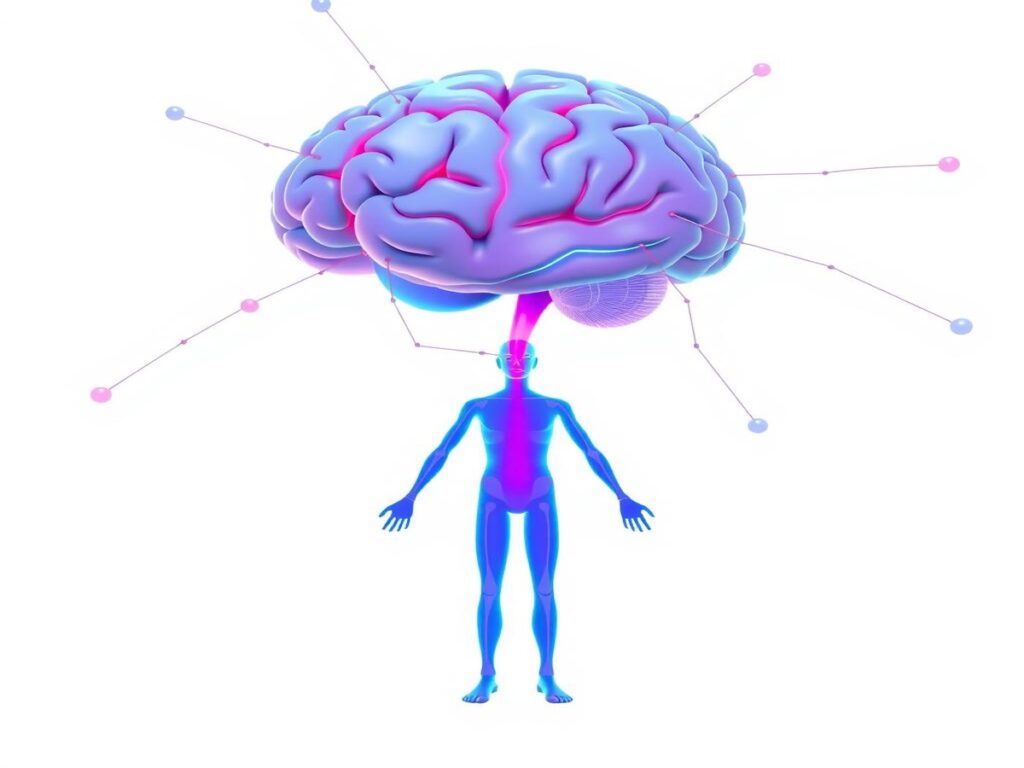
MP Board Class 10 Science Chapter 6: Control & Coordination
📚 MP Board Class 10 Science Chapter 6: Control and Coordination
Complete Notes, Diagrams Explanation, Important Questions & PYQs (2017-2026) — As per MP Board & NCERT Syllabus
📑 Table of Contents
- 1. Introduction to Control & Coordination
- 2. Neuron — Structure & Function
- 3. Human Nervous System
- 4. Reflex Action & Reflex Arc
- 5. Human Brain — Structure & Parts
- 6. Endocrine System & Hormones
- 7. Feedback Mechanism
- 8. Coordination in Plants
- 9. Plant Hormones (Phytohormones)
- 10. Comparison: Nervous vs Hormonal Control
- 📝 Important Questions & PYQs (2017-2026)
1️⃣ Introduction to Control & Coordination
Living organisms respond to stimuli from their environment. Control and coordination ensure that different parts of an organism work together in a harmonized manner.
- Stimulus: Any change in the environment that causes a response (e.g., touch, light, heat)
- Response: The reaction of an organism to a stimulus
- Receptors: Specialized cells that detect stimuli (e.g., eyes, ears, skin, nose, tongue)
- Effectors: Muscles or glands that carry out responses
Types of Coordination in Animals
| ⚠️ Nervous System | 🧪 Hormonal/Endocrine System |
|---|---|
| Fast & short-lived responses | Slow & long-lasting responses |
| Uses electrical impulses (nerve signals) | Uses chemical messengers (hormones) |
| Conducted through neurons | Transported via blood |
| Localized effect | Widespread effect on target organs |
2️⃣ Neuron — The Structural & Functional Unit
🧬 Diagram: Structure of a Neuron
                  DENDRITES
              ╔══╦══╦══╦══╗
              ╚══╩══╩══╩══╝
                    │
                    │   ← Dendrites receive impulses
                    ▼
                ╔═══════╗
     NUCLEUS →  ║  CELL  ║  ← Cell Body (Cyton)
                ║  BODY ║
                ╚═══════╝
                    │
                    │   ← Axon conducts impulses away
                    ▼
        ╔═══════════════════════╗
        ║       AXON            ║  ← (May have myelin sheath)
        ╚═══════════════════════╝
                    │
              ┌─────┴─────┐
            ──┴──       ──┴──   ← Axon terminals release
            ──┬──       ──┬──      neurotransmitters
              └───────────┘

  COMPONENTS:
  ├─ Dendrites  → Receive signals from other neurons/sensors
  ├─ Cyton      → Contains nucleus & organelles; integrates signals
  ├─ Axon       → Carries impulse away from cell body
  └─ Axon Terminals → Pass signal to next neuron via synapse
🎯 Key Terms:
- Myelin Sheath: Fatty insulating layer on axon — speeds up impulse conduction
- Synapse: Tiny gap between two neurons where chemical transmission occurs
- Neurotransmitters: Chemical substances (e.g., acetylcholine) that carry signals across synapse
- Impulse: Electrochemical signal traveling along a neuron
How a Nerve Impulse Travels:
- Dendrite detects stimulus (e.g., heat from fire)
- Electrical impulse travels through cyton → axon
- Reaches axon terminal → releases neurotransmitters
- Neurotransmitters cross the synapse → bind to dendrite of next neuron
- Signal continues along the neural pathway
3️⃣ Human Nervous System
☀️ Overview Diagram
              ┌─────────────────────────────────┐
              │     HUMAN NERVOUS SYSTEM        │
              └─────────────────────────────────┘
                           │
            ┌──────────────┴──────────────┐
            ▼                              ▼
    ┌───────────────┐            ┌──────────────────┐
    │ CENTRAL NS    │            │ PERIPHERAL NS    │
    │ (CNS)         │            │ (PNS)            │
    ├───────────────┤            ├──────────────────┤
    │ Brain +       │            │ Cranial Nerves   │
    │ Spinal Cord   │            │ (12 pairs)       │
    └───────────────┘            │ Spinal Nerves    │
                                 │ (31 pairs)       │
                                 └──────────────────┘
                                           │
                          ┌────────────────┴────────────────┐
                          ▼                                 ▼
                  ┌───────────────┐                 ┌─────────────────┐
                  │ Somatic NS    │                 │ Autonomic NS    │
                  │ (Voluntary)   │                 │ (Involuntary)   │
                  └───────────────┘                 └─────────────────┘
Divisions of Nervous System:
| Division | Function | Example |
|---|---|---|
| CNS (Brain + Spinal Cord) | Control center — processes info and sends commands | Deciding to withdraw hand from fire |
| PNS (Cranial + Spinal Nerves) | Carries signals to/from CNS | Sensory input → CNS → motor output |
| Somatic NS | Voluntary control of skeletal muscles | Picking up a book, walking |
| Autonomic NS | Involuntary control (organs, glands) | Heartbeat, digestion, breathing |
4️⃣ Reflex Action & Reflex Arc
⚡ What is a Reflex Action?
A reflex action is a rapid, automatic, involuntary response to a stimulus — does NOT involve the brain (only spinal cord).
Examples: Pulling hand away from hot object, knee-jerk reflex, blinking when something approaches eye, sneezing, coughing
🧠 Diagram: Reflex Arc
  STIMULUS (Heat/Fire)
       │
       ▼
  ┌────────────────┐     Sensory Neuron    ┌────────────────┐
  │  RECEPTOR      │ ─────────────────────→ │  SPINAL CORD   │
  │  (Skin - pain) │                       │  (Relay Neuron) │
  └────────────────┘                       └────────────────┘
                                                   │
                                          Motor Neuron
                                                   │
                                                   ▼
                                           ┌────────────────┐
                                           │   EFFECTOR     │
                                           │  (Muscle)      │
                                           └────────────────┘
                                                   │
                                                   ▼
                                           RESPONSE: Hand pulled away

  📍 PATHWAY OF REFLEX ARC:
  Stimulus → Receptor → Sensory Neuron → Spinal Cord (Relay Neuron)
  → Motor Neuron → Effector (Muscle/Gland) → Response

  ❗ Key: Brain is NOT involved — this makes reflex actions very FAST!
📝 Importance of Reflex Actions:
- Protection: Prevents tissue damage (e.g., pulling away from fire)
- Speed: Bypasses brain, uses only spinal cord → extremely fast
- Automatic: Works without conscious effort
- Survival: Helps organisms respond quickly to danger
5️⃣ Human Brain — Structure & Parts
🧠 Diagram: Human Brain — Major Parts
                     ┌──────────────────┐
                     │   CEREBRUM       │  ← Thinking, memory,
                     │  (Forebrain)     │     voluntary actions
                     │   Largest part   │
                     │   Divided into   │
                     │   Left & Right   │
                     │   Hemispheres    │
                     └────────┬─────────┘
                              │
                     ┌────────┴─────────┐
                     │   CEREBELLUM     │  ← Balance, posture,
                     │   (Hindbrain)    │     coordination of
                     │                  │     fine movements
                     └────────┬─────────┘
                              │
                     ┌────────┴─────────┐
                     │   MEDULLA        │  ← Heartbeat, breathing,
                     │   OBLONGATA      │     blood pressure, reflex
                     │   (Hindbrain)    │     centers (coughing, etc.)
                     └──────────────────┘

  OTHER KEY STRUCTURES:
  ├─ Pons (Hindbrain) → Respiration control, connects brain parts
  ├─ Hypothalamus → Temperature regulation, hunger, thirst, hormones
  ├─ Pituitary Gland → Master gland (hormones)
  └─ Spinal Cord → Connects brain to PNS, reflex center
Major Parts & Their Functions:
| Part | Division | Functions |
|---|---|---|
| Cerebrum | Forebrain | Voluntary actions, thinking, learning, memory, speech, emotions, sensory perception (sight, hearing, touch, taste, smell) |
| Cerebellum | Hindbrain | Maintains balance & posture, coordinates voluntary muscle movements, fine motor control |
| Medulla Oblongata | Hindbrain | Controls involuntary actions: heartbeat, breathing, blood pressure, swallowing, vomiting, sneezing |
| Hypothalamus | Forebrain | Body temperature regulation, hunger, thirst, sleep, links nervous & endocrine systems |
| Pituitary Gland | (Endocrine) | Master gland — secretes hormones that control other endocrine glands |
6️⃣ Endocrine System & Hormones
🧪 What is a Hormone?
Hormones are chemical messengers secreted by endocrine glands directly into the blood. They travel to target organs and regulate specific functions.
Major Endocrine Glands & Their Hormones:
| Gland | Location | Hormone(s) | Function |
|---|---|---|---|
| Pituitary | Base of brain | Growth Hormone (GH), TSH, ACTH, etc. | Master gland — regulates growth & other glands |
| Thyroid | Neck (below larynx) | Thyroxine | Regulates metabolism, growth, body temperature |
| Parathyroid | Behind thyroid | Parathormone (PTH) | Regulates calcium & phosphate balance |
| Adrenal | Above kidneys | Adrenaline (Epinephrine) | Fight-or-flight response — increases heart rate, BP, blood glucose |
| Pancreas | Behind stomach | Insulin & Glucagon | Regulates blood sugar (glucose) level |
| Testes (♂) | Scrotum | Testosterone | Male secondary sexual characteristics, sperm production |
| Ovaries (♀) | Lower abdomen | Estrogen & Progesterone | Female secondary sexual characteristics, menstrual cycle |
Disorders Related to Hormones:
| Condition | Cause | Symptoms |
|---|---|---|
| Goitre | Iodine deficiency → low thyroxine | Swollen neck (enlarged thyroid gland) |
| Diabetes Mellitus | Insufficient insulin or insulin resistance | High blood sugar, frequent urination, thirst, weight loss |
| Gigantism | Excess GH in childhood | Excessive growth, very tall stature |
| Dwarfism | Deficiency of GH in childhood | Stunted growth, very short stature |
| Hyperthyroidism | Excess thyroxine | Weight loss, rapid heartbeat, nervousness |
| Hypothyroidism | Low thyroxine | Weight gain, fatigue, sluggishness |
7️⃣ Feedback Mechanism
🔄 How the Body Self-Regulates
Feedback mechanism is the process by which the body maintains homeostasis by increasing or decreasing a response.
Two Types:
- Positive Feedback: Amplifies the response (e.g., release of oxytocin during childbirth → more contractions)
- Negative Feedback: Reverses the change — most common (e.g., insulin release when blood sugar is high → brings sugar down)
🎯 Example: Blood Sugar Regulation (Negative Feedback)
  Blood Sugar RISES (after meal)
         │
         ▼
  Pancreas detects high blood glucose
         │
         ▼
  β-cells release INSULIN
         │
         ▼
  Liver & muscles take up glucose
  → Glucose stored as Glycogen
         │
         ▼
  Blood sugar returns to NORMAL
         │
         ▼
  Insulin secretion STOPS
         ──────────────────────────────→ (Negative Feedback)

  Blood Sugar DROPS (between meals / exercise)
         │
         ▼
  α-cells release GLUCAGON
         │
         ▼
  Glycogen → Glucose in liver
         │
         ▼
  Blood sugar returns to NORMAL
8️⃣ Coordination in Plants
Plants do NOT have a nervous system. Instead, they respond to stimuli through hormones and growth movements.
Tropic Movements (Directional Growth Responses)
| Type | Stimulus | Response | Example |
|---|---|---|---|
| Phototropism | Light | Shoots grow towards light (+), roots grow away (−) | Sunflower bending towards sun |
| Geotropism | Gravity | Roots grow downwards (+), shoots grow upwards (−) | Roots always growing downward |
| Hydrotropism | Water | Roots grow towards water (+) | Roots in dry soil grow towards moisture |
| Chemotropism | Chemicals | Growth towards or away from chemicals | Pollen tube grows towards ovary (ovule) |
| Thigmotropism | Touch | Growth response to touch | Tendrils of pea plant coiling around support |
🌱 Key Difference: Tropic vs Nastic Movements
- Tropic Movements: Direction of response depends on direction of stimulus (e.g., shoot grows TOWARDS light)
- Nastic Movements: Direction of response is independent of stimulus direction (e.g., Mimosa pudica — touch-me-not — leaves fold when touched, regardless of which way you touch)
9️⃣ Plant Hormones (Phytohormones)
| Hormone | Produced In | Functions |
|---|---|---|
| Auxin | Shoot tips, root tips | Promotes cell elongation, phototropism, geotropism; inhibits lateral bud growth |
| Gibberellin | Young leaves, seeds | Promotes stem elongation, seed germination, fruit development |
| Cytokinin | Root tips | Promotes cell division (cytokinesis), delays aging (senescence), stimulates lateral bud growth |
| Abscisic Acid (ABA) | Leaves, fruits, seeds | Inhibits growth (stress hormone); promotes stomatal closure in drought; induces seed dormancy |
| Ethylene | Fruits, tissues | Gaseous hormone — promotes fruit ripening, leaf & flower senescence |
🧪 Experiment: Phototropism in Plants
Aim: Show that shoot bends towards light due to auxin distribution.
Procedure: Place a potted plant with growing shoot tip in a box with only one small window for light. Observe after 3-4 days.
Observation: The shoot bends and grows towards the light source.
Conclusion: Auxin accumulates on the dark side of the shoot, causing more cell elongation there, making the shoot bend towards light.
🔍 Comparison: Nervous vs Hormonal Coordination
| Feature | Nervous System | Hormonal System |
|---|---|---|
| Nature of signal | Electrical impulses (nerve) | Chemical messengers (hormones) |
| Transmission speed | Very fast (milliseconds) | Slow (seconds to hours) |
| Duration of effect | Short-lived | Long-lasting |
| Transmission medium | Neurons (nerve fibers) | Blood (circulatory system) |
| Target | Specific muscles/glands | Specific target organs/cells |
| Response type | Precise, localized | Diffuse, widespread |
| Example | Pulling hand from fire | Adrenaline release during fear |
📝 Important Questions & PYQs (MP Board 2017-2026)
🔹 Very Short Answer Questions (1 Mark)
Q1. What is the function of the medulla oblongata? (MP 2020, 2022)
Ans: It controls involuntary actions like heartbeat, breathing, and blood pressure.
Q2. Name the plant hormone that promotes cell elongation. (MP 2019, 2023)
Ans: Auxin.
Q3. Which gland secretes insulin? (MP 2018, 2021)
Ans: Pancreas (Islets of Langerhans — β-cells).
Q4. What is a synapse? (MP 2020)
Ans: The tiny gap between two adjacent neurons where chemical transmission of nerve impulses occurs.
Q5. Which hormone is called the “fight or flight” hormone? (MP 2022)
Ans: Adrenaline (epinephrine) — secreted by adrenal glands.
🔹 Short Answer Questions (2-3 Marks)
Q6. Draw a labeled diagram of a neuron and explain its functions. (MP 2019, 2021, 2024)
Ans: (See neuron diagram above) — Dendrites receive signals, cyton integrates, axon conducts impulse, axon terminals transmit via synapse.
Q7. What is a reflex action? Explain with the help of a reflex arc diagram. (MP 2018, 2020, 2023)
Ans: Reflex action is a rapid, automatic response to a stimulus involving the spinal cord (not brain). Pathway: Stimulus → Receptor → Sensory Neuron → Spinal Cord (Relay Neuron) → Motor Neuron → Effector → Response.
Q8. Differentiate between tropic and nastic movements with examples. (MP 2022)
Ans: Tropic → directional response to stimulus (e.g., phototropism — shoot towards light). Nastic → response independent of stimulus direction (e.g., Mimosa leaf folding on touch).
Q9. Name any two plant hormones and write their functions. (MP 2019, 2021, 2023)
Ans: (a) Auxin → cell elongation, phototropism. (b) Gibberellin → stem elongation, seed germination. (c) Cytokinin → cell division. (d) Abscisic acid → inhibits growth, stomatal closure.
Q10. Explain how the nervous system and endocrine system work together for coordination in the human body. (MP 2024)
Ans: The hypothalamus links both systems — it receives neural signals and controls the pituitary gland (master endocrine gland), which then releases hormones to regulate other glands.
🔹 Long Answer Questions (4-5 Marks)
Q11. Draw a well-labeled diagram of the human brain. Describe the functions of its main parts. (MP 2018, 2020, 2022, 2024)
Ans: (See brain diagram above)
- Cerebrum: Thinking, memory, voluntary actions, sensory perception
- Cerebellum: Balance, posture, coordination of movements
- Medulla Oblongata: Heartbeat, breathing, blood pressure, reflexes
Q12. Explain the mechanism of blood sugar regulation in the human body. (MP 2019, 2021, 2023)
Ans: (See feedback mechanism diagram above)
- When blood sugar rises → pancreas releases insulin → liver takes up glucose → stores as glycogen → blood sugar falls
- When blood sugar falls → pancreas releases glucagon → glycogen converted back to glucose → blood sugar rises
- This is an example of negative feedback
Q13. Describe the structure and function of the human nervous system with a labeled diagram. (MP 2020, 2022, 2024)
Ans: (See nervous system hierarchy diagram above)
- CNS: Brain (thinking, memory, control) + Spinal Cord (reflex actions)
- PNS: Cranial nerves (12 pairs) + Spinal nerves (31 pairs) — connect CNS to body
- Autonomic NS: Controls involuntary actions (heartbeat, digestion)
- Somatic NS: Controls voluntary actions (walking, writing)
Q14. Explain what will happen if:
- Pancreas fails to produce insulin
- Thyroid is iodine-deficient
- Adrenal gland produces excess adrenaline
Ans:
- ⇒ Diabetes mellitus — high blood sugar, frequent urination, thirst
- ⇒ Goitre — swollen neck due to enlarged thyroid gland; low metabolic rate
- ⇒ Continuous fight-or-flight state — increased heart rate, high BP, anxiety, nervousness
Q15. Describe an experiment to demonstrate phototropism in plants. (MP 2021, 2023)
Ans: Take a potted plant with a growing shoot. Place it inside a cardboard box with a small window on one side. Keep in a dark room for 3-4 days. Observation: The shoot bends and grows towards the light coming through the window. Conclusion: Auxin accumulates on the darker side of the shoot, causing more cell elongation there, making the shoot bend towards light.
🔹 Fill in the Blanks (PYQs)
- The junction between two neurons is called ______. (Synapse — MP 2020)
- ______ hormone regulates blood sugar level. (Insulin — MP 2019, 2022)
- The largest part of the human brain is ______. (Cerebrum — MP 2021)
- Iodine is essential for the synthesis of ______ hormone. (Thyroxine — MP 2018, 2023)
- ______ is the plant hormone responsible for fruit ripening. (Ethylene — MP 2022)
- The response of roots to gravity is called ______. (Geotropism — MP 2020, 2024)
- ______ gland is called the master gland of the body. (Pituitary — MP 2021)
- In a neuron, the signal travels from dendrites to axon via ______. (Cyton/Cell body — MP 2023)
🔹 True/False (PYQs)
- Adrenaline is secreted by adrenal gland. ✓ True (MP 2019)
- Cerebellum controls thinking and memory. ✗ False (It controls balance & coordination) (MP 2020)
- Abscisic acid promotes growth in plants. ✗ False (It inhibits growth) (MP 2022)
- Reflex actions are controlled by the brain. ✗ False (They involve the spinal cord) (MP 2021)
- Insulin deficiency causes diabetes mellitus. ✓ True (MP 2023)
- Auxin promotes cell elongation in plants. ✓ True (MP 2020)
🔹 Match the Following
| Column A | Column B |
|---|---|
| A. Auxin | 1. Fruit ripening |
| B. Ethylene | 2. Balance & coordination |
| C. Cerebellum | 3. Cell elongation |
| D. Medulla | 4. Controls heartbeat |
| E. Insulin | 5. Blood sugar regulation |
Ans: A-3, B-1, C-2, D-4, E-5
💯 Quick Revision — Key Points to Remember
- Neuron = structural & functional unit of nervous system (Dendrite → Cyton → Axon → Synapse)
- Reflex Arc = Receptor → Sensory Neuron → Spinal Cord → Motor Neuron → Effector
- 3 parts of Brain: Cerebrum (thinking), Cerebellum (balance), Medulla (involuntary)
- 5 Plant Hormones: Auxin (elongation), Gibberellin (stem growth), Cytokinin (cell division), ABA (inhibitor), Ethylene (ripening)
- 5 Tropic Movements: Photo (light), Geo (gravity), Hydro (water), Chemo (chemicals), Thigmo (touch)
- Major Glands: Pituitary (master), Thyroid (metabolism), Adrenal (fight/flight), Pancreas (insulin), Gonads (sex hormones)
- Feedback: Negative (reverses change — most common), Positive (amplifies — childbirth)
- Disorders: Goitre (iodine ↓), Diabetes (insulin ↓), Dwarfism/Gigantism (GH)
📥 Download PDF: Coming Soon — Bookmark this page for updates!
🔗 Share: mpboard.ai — Your Complete MP Board Study Resource