MP Board 10 Science Ch13: Our Environment Notes
MP Board Class 10 Science Chapter 13: Our Environment – Notes, Questions & PYQs
Chapter 13: Our Environment is an important scoring chapter in MP Board Class 10 Science. It covers ecosystems, food chains, environmental problems like ozone depletion and waste management. This chapter is mostly theoretical and carries 4-6 marks in the exam.
📚 Key Concepts
- Environment: Everything that surrounds us — living (biotic) and non-living (abiotic) components
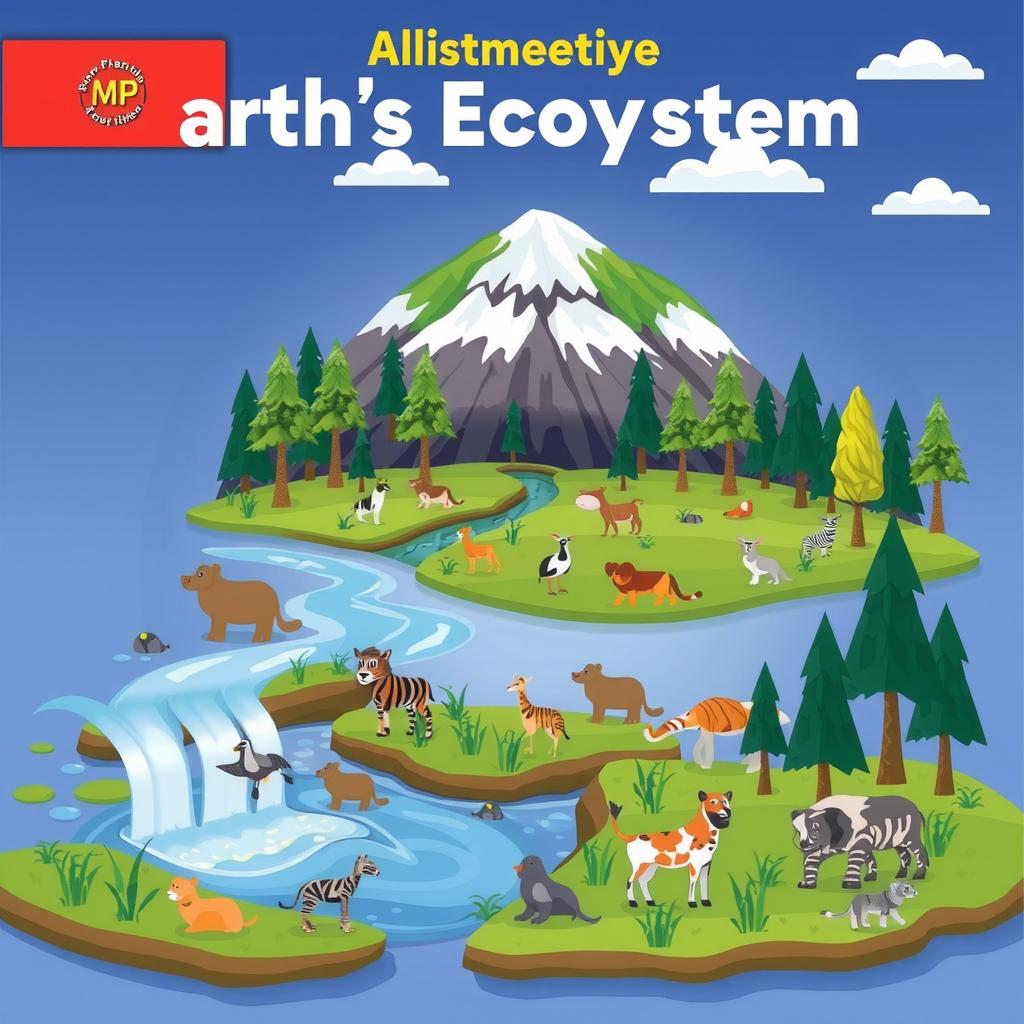
- Ecosystem: A self-sustaining system where living organisms interact with each other and their physical environment. Examples: Forest, Pond, Desert, Grassland
- Biotic Components: Producers (plants), Consumers (herbivores, carnivores, omnivores, decomposers)
- Abiotic Components: Sunlight, temperature, water, soil, air, nutrients
- Food Chain: Linear sequence of who eats whom.
Example: Grass → Grasshopper → Frog → Snake → Eagle - Food Web: Interconnected food chains in an ecosystem. More stable than a single food chain
- Trophic Levels: Steps in a food chain — T₁ (Producers), T₂ (Primary consumers/Herbivores), T₃ (Secondary consumers), T₄ (Tertiary consumers/Top carnivores)
- 10% Law (Lindeman’s Law): Only 10% of energy transfers from one trophic level to the next. 90% is lost as heat, respiration, undigested matter
- Biomagnification: Increase in concentration of harmful substances (like pesticides, DDT) at each trophic level. Top consumers are most affected
- Ozone Layer: Layer of O₃ gas in the stratosphere. Absorbs 97-99% of harmful UV radiation from the sun
- Ozone Depletion: Caused by CFCs (Chlorofluorocarbons) — used in refrigerators, ACs, aerosol sprays. Creates ozone hole over Antarctica
- Montreal Protocol (1987): International treaty to phase out ODS (Ozone Depleting Substances) like CFCs. A successful global environmental agreement
- Waste Management: Biodegradable (decomposed by microbes — paper, wood, food) vs Non-biodegradable (not decomposed — plastics, glass, metals, DDT)
🌿 Food Chain & Energy Flow
Important Note: The number of trophic levels in a food chain is limited to 3-4 because only 10% energy passes at each level. After 4 steps, the energy left is too small to sustain another level.
| Trophic Level | Organism | Energy (starting: 10,000 J) |
|---|---|---|
| T₁ — Producers | Plants (Grass) | 10,000 J |
| T₂ — Primary Consumers | Herbivores (Grasshopper) | 1,000 J (10%) |
| T₃ — Secondary Consumers | Small carnivores (Frog) | 100 J (10%) |
| T₄ — Tertiary Consumers | Top carnivores (Snake) | 10 J (10%) |
♻️ Waste Management
| Type | Examples | Disposal Method |
|---|---|---|
| Biodegradable | Fruit peels, paper, wood, cotton, cow dung | Composting, biogas plant |
| Non-biodegradable | Plastic, glass, DDT, polythene, metal cans | Recycling, landfill, incineration |
📝 MP Board Important Questions (PYQs)
1 Mark Questions
- Define ecosystem.
- What is the 10% law in ecology? Who proposed it?
- Name the gas which protects us from UV radiation.
- What are CFCs? Where are they used?
- Give one example of non-biodegradable waste.
3 Mark Questions
- What is a food chain? Draw a food chain of 4 trophic levels found in a forest ecosystem. Explain the energy flow using the 10% law.
- What is biomagnification? Explain with the example of DDT in an aquatic food chain.
- Differentiate between biodegradable and non-biodegradable substances. Give 2 examples each.
5 Mark Questions
- Explain the formation of ozone. Why is the ozone layer important? What causes its depletion and what steps have been taken to protect it?
- How is waste produced in our daily life? Suggest proper methods of waste disposal. Why is it important to segregate waste into biodegradable and non-biodegradable categories?
📝 Practice Questions
- Why are green plants called producers?
- What happens to the energy that is not transferred to the next trophic level?
- Why are there rarely more than 4 or 5 trophic levels in a food chain?
- What is the role of decomposers in an ecosystem?
- Which chemical is responsible for ozone depletion? Write its full name and use.
- Why should we not use polythene bags? Suggest alternatives.
💡 Key Points for MP Board Exam
- This is a theoretical chapter — no numericals, mostly definitions and explanations
- 10% law and biomagnification are the most frequently asked concepts
- Ozone depletion + Montreal Protocol is a common 5-mark question
- Food chain diagrams with energy flow at each level are frequently asked
- Differentiate between biodegradable/non-biodegradable — very common 3-mark question
- Remember: Decomposers (bacteria & fungi) are the ultimate recyclers in nature
🎯 MP Board Exam Tips
- Write clean, labelled food chains with arrows showing energy flow (→)
- Memorize examples: Grass/Grasshopper/Frog/Snake/Eagle or Phytoplankton/Zooplankton/Fish/Bird
- For ozone question: Formation (UV + O₂ → O + O; O + O₂ → O₃), Depletion (CFCs), Solution (Montreal Protocol 1987)
- This chapter typically carries 4-6 marks in MP Board exams
📥 Bookmark this page for quick revision before your MP Board 2027 exams!
✅ This completes all Class 10 Science chapters on mpboard.ai. Study well and score 90%+!